

AC Installation in Albuquerque, NM
New central air designed around a Manual J load calculation, with a written price and a tested system before we leave.
- NM CID License #413436
- 24 Google reviews
- Led by Dominic Montoya, over 20 years in the trade
- Free written estimates
AC installation in Albuquerque should start with a load calculation and a duct inspection, before anyone talks tonnage. This page is for houses getting central air for the first time: a home with a furnace and ducts but no cooling, an addition that changes the load, or a new build. Red Wrench Company designs the system, gives you a free written estimate and tests everything before we leave.
Which System Fits a House Getting Central Air?
Choose the system from the house you have. These four setups cover most first-time cooling jobs.
| The house today | Usual fit | What to weigh |
|---|---|---|
| Gas furnace with sound ducts | Split AC: outdoor condenser plus a coil at the furnace | The furnace blower has to move the airflow the new coil needs |
| Electric heat or a tired furnace | Heat pump with an air handler | One system for both seasons; check winter capacity against about 113 freezing nights a year |
| Flat roof, ceiling ducts, no room for a condenser | Packaged rooftop unit | Roof load, the curb and flashing all become part of the job |
| No ducts, or a single room to cool | Ductless mini split | No duct work, but a visible indoor head in each zone |
A central system already in place and failing belongs on our AC replacement page. If a cooler sits on the roof today, read about the swamp cooler conversion, because those ducts need their own review.
Signs a House Is Ready for Central Air
A few findings on the first walk-through tell us the job should be straightforward:
- Ducts already reach the main rooms, and the house has a return path
- The furnace has room for a coil in its airstream
- The panel has space for a dedicated circuit
- The yard has a level spot for the condenser near the house
If one of these is missing, the job can still work, but that line moves on the quote. Older electrical panels and flat roofs with little attic are the usual reasons here.
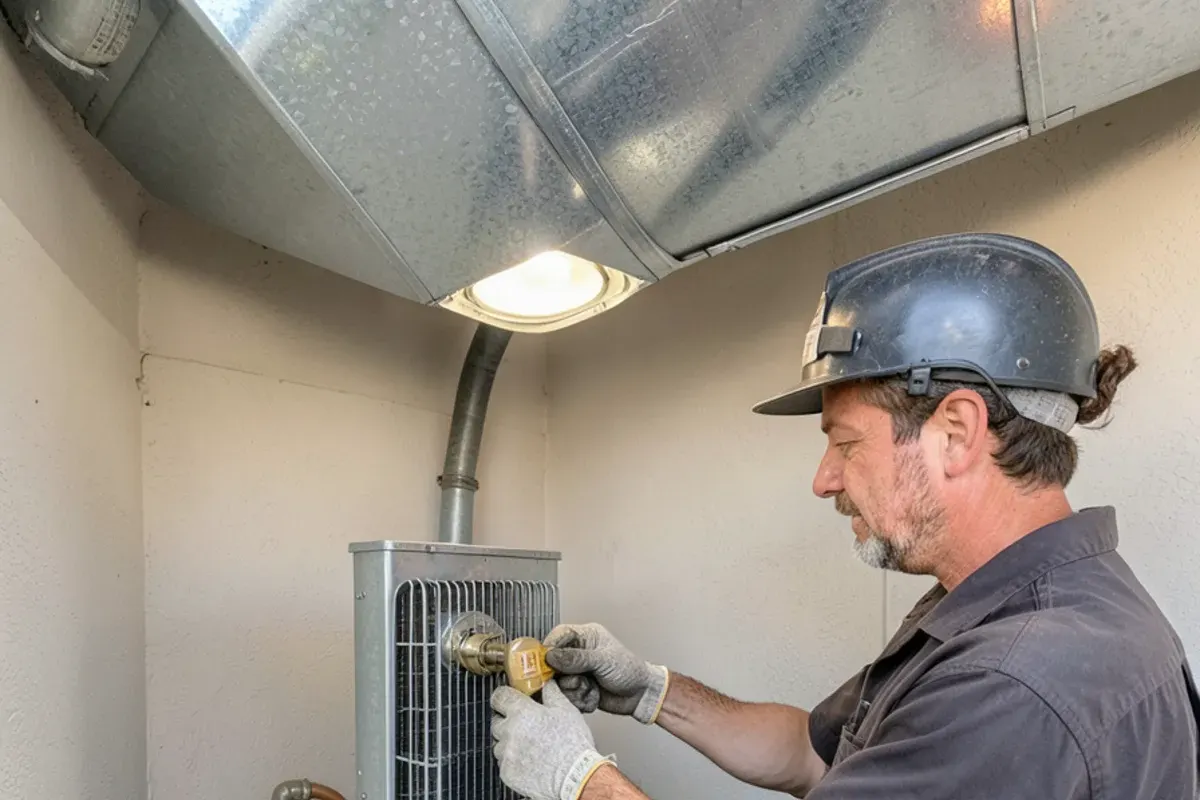
Sizing Decisions: Manual J, S and D in Plain Words
Size the system with arithmetic, room by room. Three design documents from the Air Conditioning Contractors of America do that work:
- Manual J is the load calculation. It estimates how much heat each room gains from sun, windows, walls, ceiling and air leaks.
- Manual S selects equipment that delivers that load, using the manufacturer's performance data.
- Manual D sizes the ducts so the air reaches each room.
Rules of thumb are the usual shortcut. The U.S. Department of Energy notes that contractors sometimes oversize central air for that reason, and an oversized unit cycles too often, which hurts efficiency and comfort. An undersized unit runs flat out and never catches up.
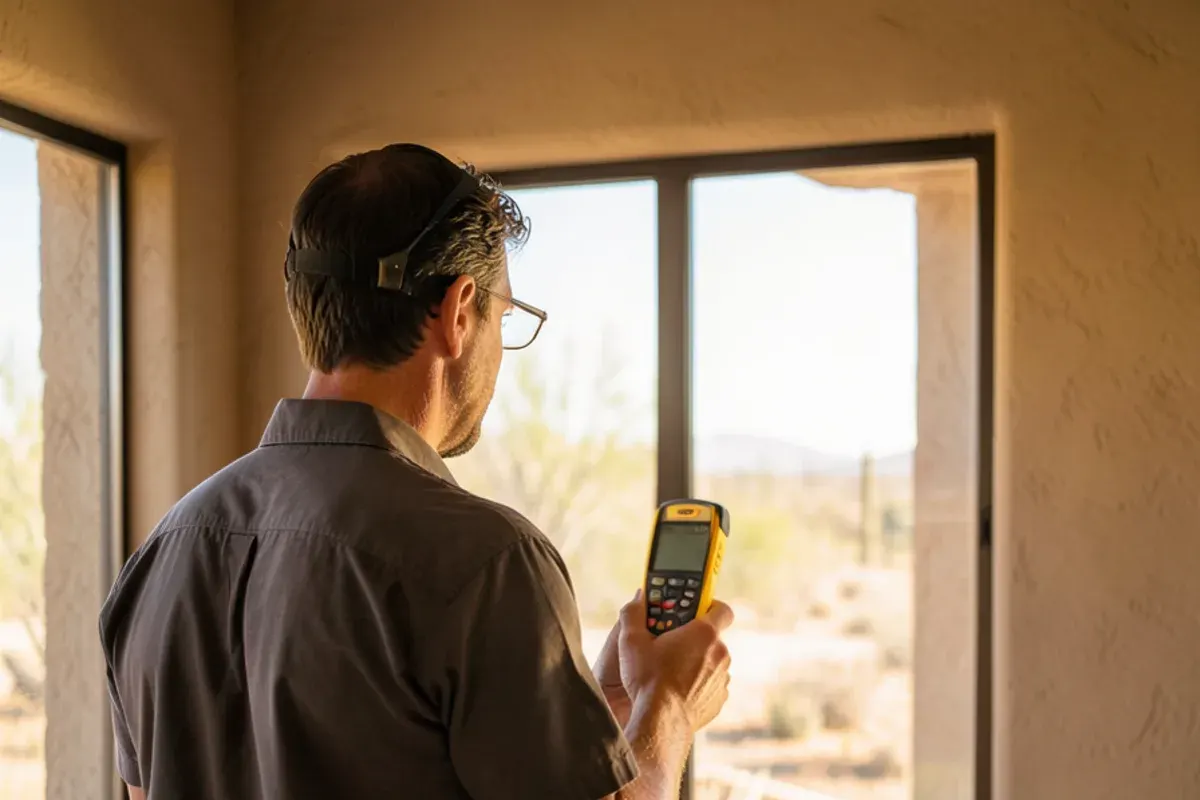
The inputs here are local. At about 5,300 feet the air is thinner, so we read the manufacturer's performance data for those conditions. A west-facing stucco wall and big windows can matter more than square footage. National Weather Service Albuquerque logged 551 cooling degree days in August 2026 against a normal of 367, and that kind of month exposes a marginal design.
Refrigerant is the other new decision. EPA rules set a global warming potential limit of 700 for new home systems, so current equipment commonly uses R-454B or R-32 in place of R-410A. Ask which one a quote includes.
What AC Installation in Albuquerque Includes
Your written estimate should list each of these lines, so nothing appears for the first time on the invoice.
- The Manual J report and the equipment selected from it
- Condenser, indoor coil, pad or roof curb, and the refrigerant line set
- A dedicated circuit and disconnect, plus a check of panel capacity
- Condensate drain with overflow protection
- Thermostat wiring or a new thermostat
- Any duct changes the design calls for
- AHRI documentation, the paperwork showing the outdoor unit and coil are a rated match
- The start-up record: charge, airflow and supply air temperature
A good quote should say who pulls the mechanical permit, and ours does.
From Load Calculation to First Cooling Cycle
Most first-time installs follow this order.
- We walk the house, inspect the ducts and note the rooms that run hot.
- We run the load calculation, choose equipment from it and give you the free written estimate, with a start date and an expected duration.
- The permit is handled the way your quote states.
- We set the condenser, fit the coil, run the line set and wire the circuit.
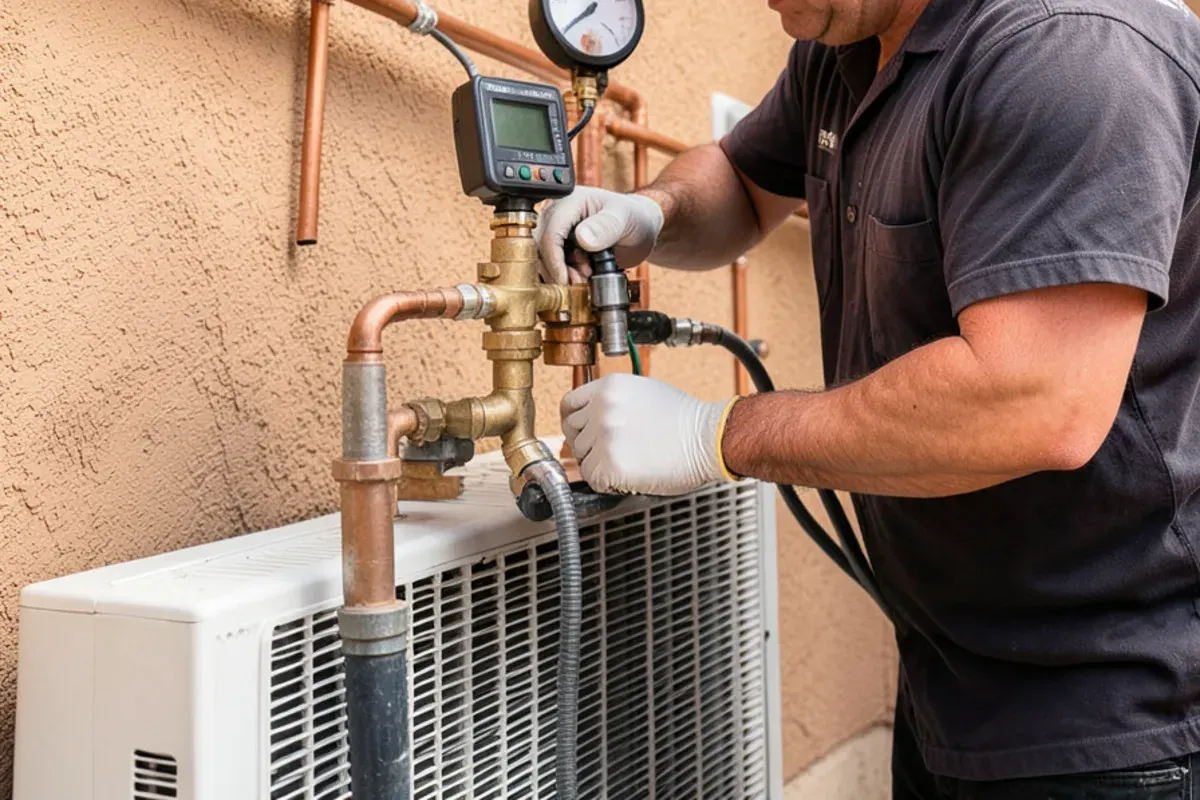
- We pull a vacuum on the lines, then set the charge by the manufacturer's method.
- We test airflow and supply air temperature, record the numbers, then show you the thermostat and filter and go over the records.
Timing depends on scope. A coil and condenser added to a sound furnace moves faster than a job with new duct runs, a panel upgrade or a rooftop lift, so your quote states the duration for your house.
Start-up is where installs go wrong. A Department of Energy research review found that 70 to 90 percent of home AC and heat pump systems studied had at least one performance fault from installation or poor maintenance. Those readings are why we measure before leaving.
What Moves the Cost of New Central Air?
A first-time install has no single price, because the house decides what the job needs. These lines move it most:
- Ducts: reused, sealed, modified or newly run
- Tonnage and efficiency rating from the load calculation
- Electrical work, especially on older panels
- Where the coil and condenser can go, and how far apart
- Roof work on a packaged unit
- Refrigerant type and current equipment supply
For local context only, RealCostIQ's 2026 estimate, which is not a government figure, puts a full HVAC replacement in Albuquerque at $7,536 typical and $3,589 to $11,483 for most projects, about 4% below the national average. That number describes replacing a system, so it will not match a first-time add-on. Get a written local quote for your house. Ours is free, and you can ask about flexible pricing options.
Permits, Efficiency Minimums and the CID License
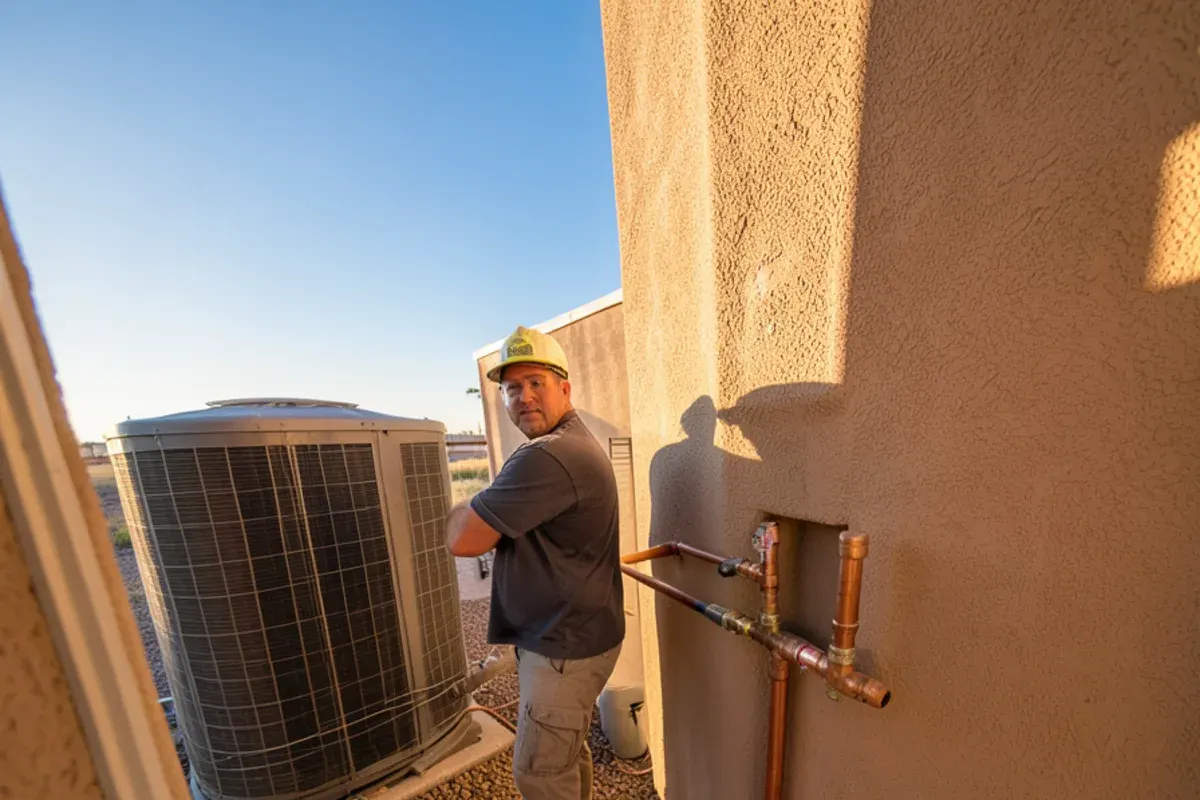
Plan on a mechanical permit. New Mexico requires one for HVAC installs, and permits have been issued only under the 2021 International Energy Conservation Code since July 30, 2024 (14.7.6 NMAC). Inside City limits the 2024 Uniform Administrative Code governs, and parts of the South Valley sit in unincorporated Bernalillo County, so verify the right office and the fee with the agency for your address.
Efficiency floors are federal. The Department of Energy's Southwest rules set 14.3 SEER2 for split central AC under 45,000 BTU/h and 13.8 SEER2 at 45,000 BTU/h and up, with an EER2 minimum as well. SEER2 measures seasonal efficiency, and EER2 measures efficiency at peak outdoor heat. ENERGY STAR split central AC starts at 15.2 SEER2 and 11.0 EER2.
Check the contractor too. The Construction Industries Division licenses HVAC work through the NM Regulation and Licensing Department, MM98 is the state's mechanical classification, and a Qualifying Party is the person a company's license rests on. Anyone can look those details up on the state verification page.
Why Red Wrench for a New AC Install
- Design before equipment. We size new systems with a Manual J load calculation and inspect the ducts first.
- Owner-led. Dominic Montoya, with over 20 years of experience in plumbing, heating and cooling, leads the company signing your quote.
- Open numbers. You get a free estimate in writing, a written price before work starts and no pressure.
- A number you can look up. Search NM CID License #413436 on the state license lookup.
- Public feedback. Read our 24 Google reviews, where customers mention clear communication and follow-up.
John B.'s review describes a full new system. Eric R.'s is a general review of the company.
“Had a entirely new unit installed new furnace new tubing all the works . Excellent job great communication even loaned me 3 window units to use while my ac was down. And installed a new thermostat for me . Highly recommend . A+++”
“Excellent experience with Red Wrench Co. They work timely and efficiently, no cutting corners and transparent. Delivered above expectations. Experience shows in the work they delivered! Highly recommended!”
Looking After a New System
Check the filter monthly through the first summer and keep the condenser clear of plants and stored items. Book AC maintenance each spring so the original start-up readings have something to compare against.
We install central air across the metro, including Rio Rancho, Los Lunas and Corrales.
Areas we serve
- Rio RanchoHomes have gone up since 1962, so additions and new builds need fresh load calculations.
- Los LunasNearly half the housing dates from 2000 on, with 1,192 cooling degree days to design for.
- BernalilloTown and county addresses follow different permit routes, so confirm yours before scheduling a new system.
- CorralesCasitas and additions on acre lots can sit far from the main house's ducts.
- PlacitasSites here run from about 5,250 to 6,100 feet, so equipment data must match elevation.
- South ValleyUnincorporated addresses use County permits, and homes from 1940 to 1969 may need panel checks.
- North ValleyLong, narrow parcels can limit where a condenser fits beside the house and its panel.
- Los Ranchos de AlbuquerqueAdding outdoor equipment can raise setback questions, so check with the Village before choosing a spot.
- Santa Fe CountyNear 7,000 feet, cooling loads run light, so size new AC carefully and book ahead.
- All service areas
AC Installation questions
How do I know what size AC my house needs?
A Manual J load calculation tells you. It works room by room from window area, wall direction, insulation and air leakage. Square footage alone misses most of that. We run the calculation before choosing equipment, so the tonnage on your quote comes from your house.
Can you add central air to my existing furnace?
Often, yes. We fit a coil at the furnace and a condenser outside, then use the furnace blower to move the air. We check the blower's airflow, the coil space and the condition of the ducts first. If the furnace is near the end of its life, we will price both options.
How long does a central air installation take?
It depends on the scope. A coil and condenser on a sound furnace is a shorter job than one needing new ducts, electrical work or roof work. Permit timing also varies by office. Your written quote states the start date and the expected duration.
What refrigerant will a new AC use?
Most new home systems use R-454B or R-32, both below the EPA's 700 global warming potential limit. EPA's 2026 rule still allows older R-410A stock built before January 1, 2025, to be installed. Ask which refrigerant your quote covers and confirm the coil and condenser match.
Do I need a permit to install central air in Albuquerque?
Yes. A mechanical permit applies to HVAC installs in New Mexico. The right office depends on your address, since parts of the South Valley are unincorporated Bernalillo County. Fees vary by source, so verify them with the agency. Any quote should state who pulls the permit, and ours does.
Do I need new ducts for central air?
Not always. Existing heating ducts can often carry cooling if they are sealed and sized for the airflow. We inspect them and check the numbers from Manual D. Long runs in hot attics or undersized returns are the common problems, and any fix appears as its own line on the quote.
Talk to Red Wrench about ac installation
Call any hour. You get a straight answer, a free written estimate and the price before the work starts.
- NM CID License #413436
- 24 Google reviews
- Led by Dominic Montoya, over 20 years in the trade
- Free written estimates
Red Wrench Company, 5635 Paradise Blvd NW, Albuquerque, NM 87114, (209) 563-1270