

Mobile Home Furnace Service in Albuquerque, NM
Service and replacement for the furnaces and AC built into manufactured homes, done to the rules those homes follow.
- NM CID License #413436
- 24 Google reviews
- Led by Dominic Montoya, over 20 years in the trade
- Free written estimates
Mobile home furnace service in Albuquerque follows different rules than a site-built house, because the furnace, its venting and its floor ducts were engineered as part of the home. Red Wrench Company repairs and replaces these systems with those limits in mind, and the written estimate is free. Albuquerque alone has 9,128 mobile homes (MMCG Analytics), so getting this right matters.
Why a Standard Furnace Can Be the Wrong Furnace
The biggest risk is installing a furnace that was never meant for the home. HUD does not approve individual furnaces. What it sets is the federal Manufactured Home Construction and Safety Standards, 24 CFR Part 3280, and the home is built to them.
Three parts of those standards matter on a furnace swap:
- Listing. Under § 3280.707, heat-producing appliances must be listed or certified by a nationally recognized testing agency. Since March 17, 2025 the text says "for residential use"; it used to say "for use in manufactured homes."
- Installation. Under § 3280.709, each appliance must be installed to its listing and the manufacturer's instructions.
- Separation. The same section calls for "complete separation" of the combustion system from the home's interior air, by a direct-vent sealed unit or an enclosure with no access from inside.
In practice, a replacement needs to be a furnace whose maker documents it for manufactured-home installation, with its own combustion air and vent parts. That is why we look at the listing and the manual before we quote. A site-built furnace may be cheaper and still leave you with a combustion or vent problem.
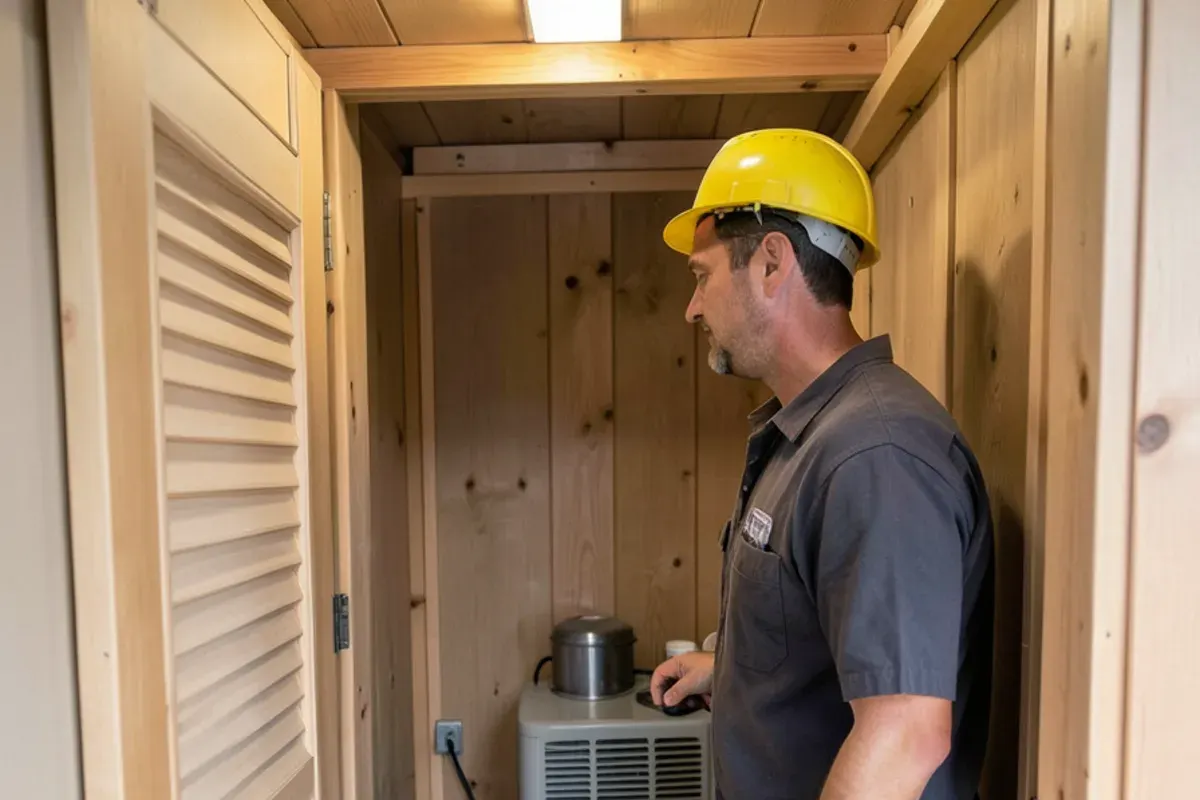
Other risks are built into the layout. A tight furnace closet leaves little clearance, and supply ducts run under the floor in the belly.
Signs It Is Time to Call
- One end of the home stays cold, which points to the crossover or belly ducts.
- The furnace cycles off early, often from a dirty filter or a blocked return path at the closet door.
- Rust, soot or a loose cap shows at the roof jack.
- A replacement quote names a furnace with no maker's paperwork for manufactured homes.
Records to Find Before You Call
Five minutes with these records saves a lot of back and forth.
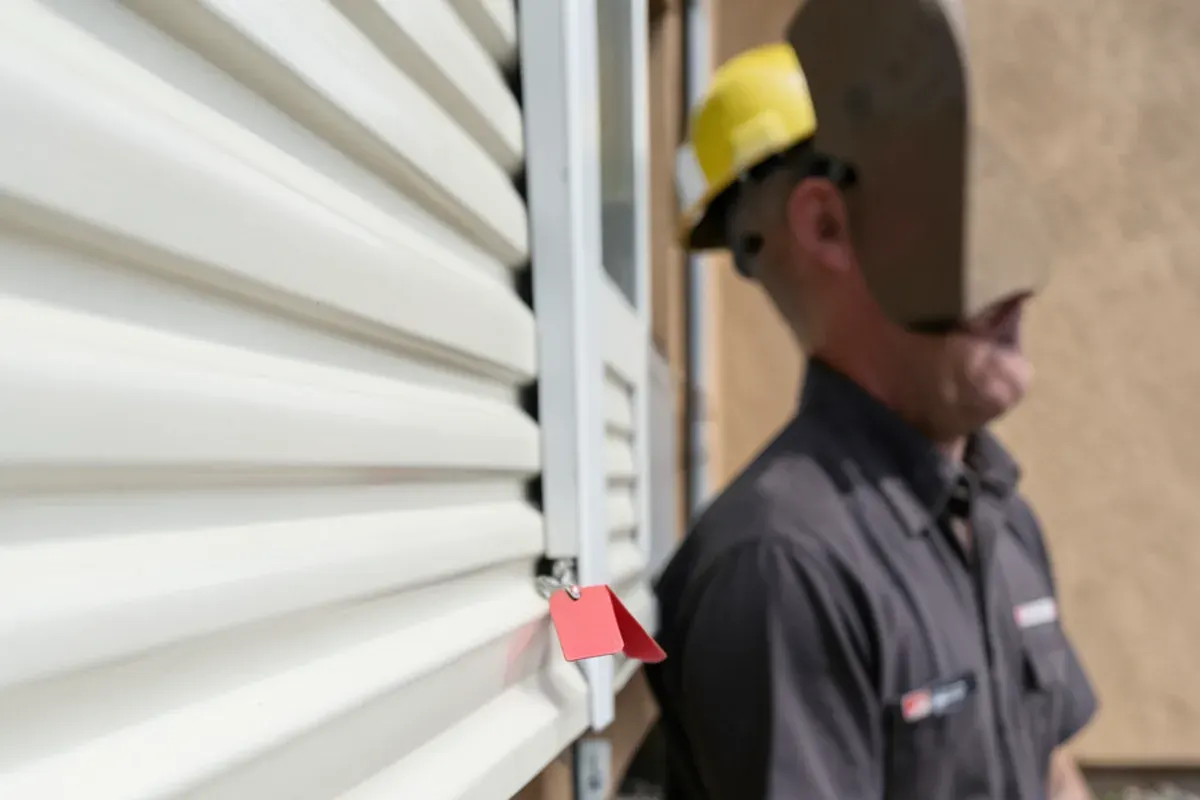
- HUD certification label. A small red tag on the outside of each section of homes built after June 15, 1976. Older units predate the federal code.
- Data plate. Usually inside a closet or a cabinet door. It names the manufacturer and the build date.
- Furnace model plate. Inside the cabinet door. It tells us the model, input and fuel.
- Fuel type. Natural gas, propane or electric.
- Past work. Any invoices or permits for earlier furnace or AC changes.
Photograph them if you can. If the home is pre-1976 or the tag is missing, tell us anyway.
What We Service in Manufactured Homes
- Gas downflow furnace repair and tune-ups
- Electric furnaces and their heating elements
- Furnace replacement with a model documented for the home
- Mobile home AC, including add-on coils and heat pumps
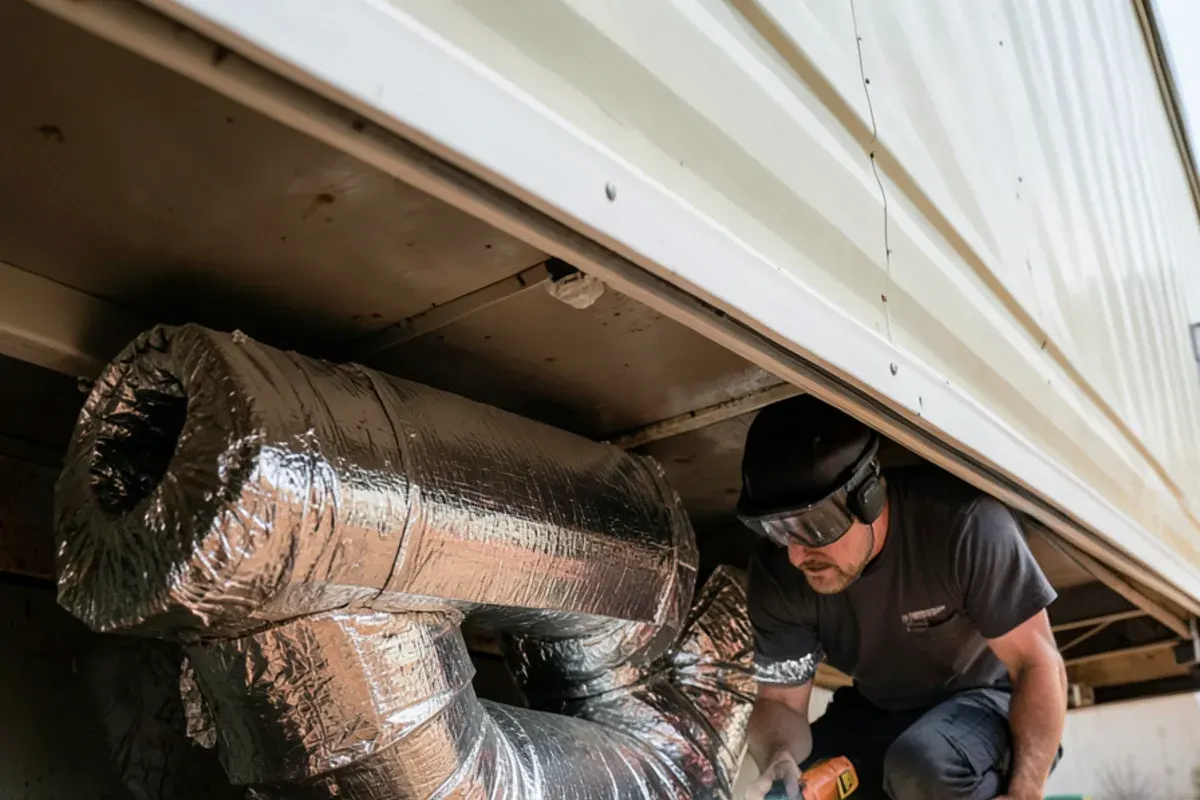
- Belly duct and crossover duct repairs
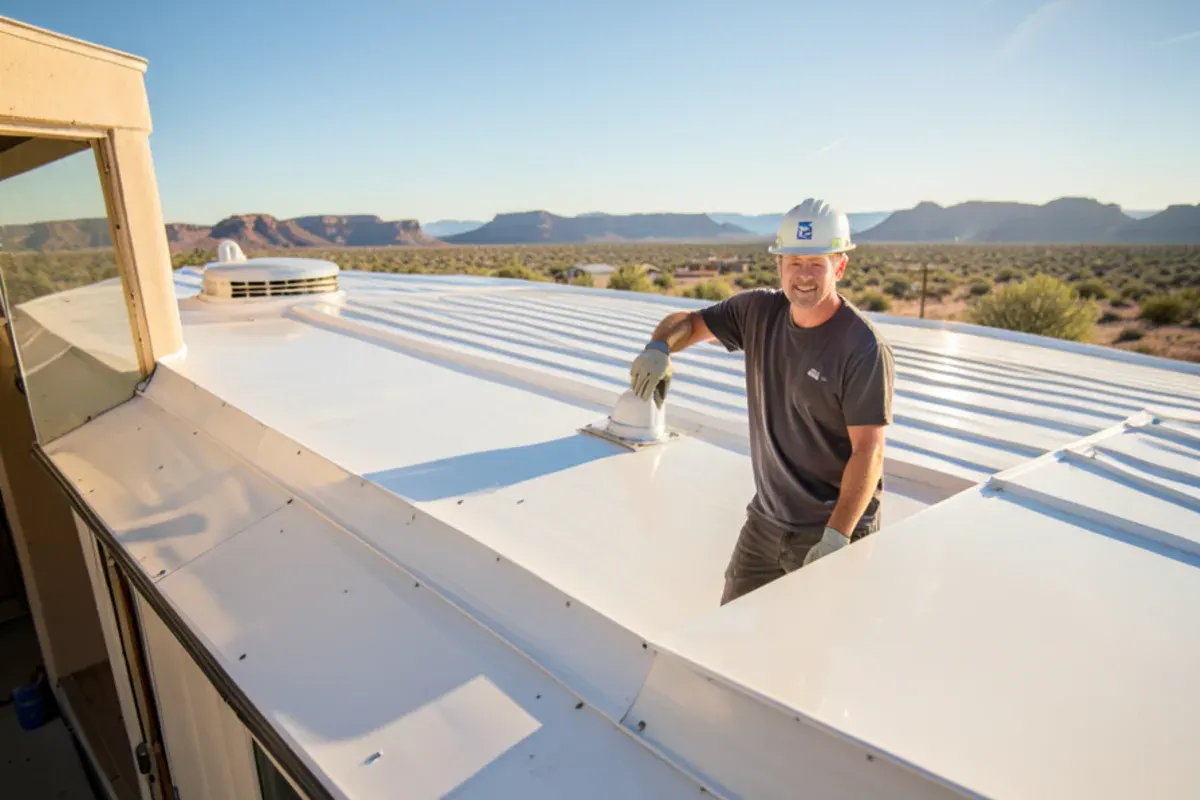
- Roof jack and vent checks
On double-section homes, we look hard at the crossover duct. Department of Energy Building America research points to that field connection between the two halves as a persistent weak spot. Air leaking into the belly can leave one end of the home cold.
How Mobile Home Furnace Service in Albuquerque Works
- We go over your records, photos and symptoms.
- We inspect the closet, door and return air path.
- We test ignition, airflow and controls, or the heating elements on electric units.
- We check the vent, roof jack and combustion air parts, then belly and crossover ducts where we can reach them.
- We show you what we found and write up the price before work starts.
- We test a full heat cycle before we leave.
How Do Parks, Skirting and Cold Snaps Affect Scheduling?
Tell us early about access. In a land-lease community, check whether the park has rules on contractor hours, parking or outside work. Duct repairs may need a skirting panel off, so clear that side of the home if you can.
Call at the first sign of trouble. A compact home loses heat quickly on a freezing night, and replacement furnaces for these homes are specialized units that may need ordering. Planned work in early fall is easier on everyone. If you are out of heat tonight, see emergency furnace repair.
What Changes the Price of Mobile Home Heating Work?
- The part, or the furnace model the home needs
- Whether an existing vent and roof jack can be reused
- Gas, propane or electric fuel
- Duct access under the home
- Night and weekend timing
No reliable local price exists for these jobs, so get a written local quote. Ours is free, comes with no pressure, and we can talk through flexible pricing options.
New Mexico Rules and Why Red Wrench
Check two things on any contractor. New Mexico requires a Construction Industries Division (CID) license for HVAC work, and the state's mechanical classification is MM98. The state's Manufactured Housing Division says CID contractors working on manufactured homes must also register with the division, so ask about it, and call the division at (505) 222-9870 to confirm whether your job needs a permit or inspection.
- Leadership. Red Wrench is led by Dominic Montoya, whose over 20 years of experience covers plumbing, heating and cooling.
- Verifiable license. NM CID License #413436 can be confirmed through the state license lookup in a minute or two.
- Respect for the home. Customers mention it, and tight closets demand it.
These are general company reviews, and none of them describes a manufactured home. We serve manufactured homes around Albuquerque, including the South Valley, Meadow Lake and Los Lunas.
“Absolutely phenomenal! Hands down the best company I had the pleasure of hiring. Super helpful, experienced and above all extremely respectful to not just me and my family but my home as well! Would definitely hire again and hope someone reading this will give them the opportunity to be their final choice for any issue! Thanks again guys!”
“Book them asap! Great professional service from people with integrity!!”
“i’ve been meaning to post this for a while. The Red wrench company is an outstanding organization. The owner and employees completed my job to perfection and did a complete follow up to ensure I was completely satisfied. If you get the opportunity, use these guys. You won’t regret it.”
Areas we serve
- South ValleyMobile homes stand among site-built houses here, so confirm county rules before any swap.
- Meadow LakeCensus estimates put about 81% of homes as manufactured, many from the 1990s.
- Los LunasManufactured homes are about 11% of stock, beside many newer site-built houses.
- BelenMobile homes rank second in the city's housing plan, including parks near the bosque.
- PeraltaAbout 31% of homes are mobile, and 11% burn propane, so name your fuel.
- MoriartyAbout 40% of homes are mobile, and the county hazard plan names them in wind impacts.
- EdgewoodAbout 24% of homes are manufactured, at a height that changes furnace setup.
- Bosque FarmsManufactured homes make up 21% of stock in a village of older houses.
- Cedar Crest15% of homes are mobile, and piped gas is rare, so check the fuel.
- All service areas
Mobile Home Furnace Service questions
Can I put a regular furnace in a mobile home?
Usually not. Federal standards require the appliance to be listed, installed to its listing and instructions, and fully separated from indoor air for combustion. Most site-built furnaces are not documented for that setup. A manufactured-home furnace is a different design, and its model number should be checked against the manual before any purchase.
Does HUD approve mobile home furnaces?
Not one by one. HUD sets the construction and safety standards, and a nationally recognized testing agency lists the appliance. The maker's instructions then say how it can be installed. Ask to see that documentation for any replacement, and confirm any New Mexico requirements with the state's Manufactured Housing Division before work starts.
What is a downflow furnace?
It is a furnace that pushes heated air down, out the bottom and into ducts under the floor. Most manufactured homes use one, since the main duct runs through the belly. It sits on a floor base, so a replacement has to line up with that opening and the existing closet.
Why is one end of my mobile home colder than the other?
Duct leaks are the usual cause. On a double-section home, the crossover duct can pull loose, and belly ducts can tear or sag. Dirty filters and a weak blower add to it. We check airflow at each end and inspect under the home. Tell us if animals have been in the skirting.
Can you add AC to a manufactured home furnace?
Often, yes, if the furnace is built to accept a coil and the closet has the room. Mobile home AC usually means an add-on coil at the furnace and an outdoor unit, or a heat pump. We check the furnace model, blower, electrical service and ducts first, then write up the options.
Do mobile home furnaces need yearly service?
Yes, and it matters here because these closets are small and close to living space. A yearly check covers the burners or elements, vent, airflow and safety controls. Keep the closet clear, and keep a working CO alarm with any fuel-burning furnace. Early fall works best around Albuquerque.
Talk to Red Wrench about mobile home furnace service
Call any hour. You get a straight answer, a free written estimate and the price before the work starts.
- NM CID License #413436
- 24 Google reviews
- Led by Dominic Montoya, over 20 years in the trade
- Free written estimates
Red Wrench Company, 5635 Paradise Blvd NW, Albuquerque, NM 87114, (209) 563-1270