

Swamp Cooler to Refrigerated Air Conversion in Albuquerque, NM
Move from a roof cooler to refrigerated air, starting with a duct inspection and a written estimate that lists every stage of the job.
- NM CID License #413436
- 24 Google reviews
- Led by Dominic Montoya, over 20 years in the trade
- Free written estimates
A swamp cooler to refrigerated air conversion in Albuquerque swaps the roof cooler for sealed cooling that keeps working through monsoon humidity. The job turns on your ducts: what is there, how they run and whether they can carry refrigerated air. Red Wrench Company inspects them first, then gives you a free written estimate listing each stage of the work.
Should You Convert or Keep the Cooler?
Convert for comfort, and be honest about the running cost. A 2016 Department of Energy consumer guide says an evaporative cooler uses about a quarter of the energy of central air and costs about half as much to install. Nobody should sell you a conversion as a way to cut the power bill.
What you buy is steady cooling on the days a cooler cannot deliver. Albuquerque's average humidity climbs from about 28% in June to 42% in July and 49% in September, per Visit Albuquerque, and those are often hot weeks. National Weather Service Albuquerque logged 10 days at or above 90°F in September 2026 against a normal of 3.7.
| Lean toward keeping the cooler | Lean toward converting |
|---|---|
| June is your hardest month and you tolerate August | Rooms stay sticky or warm through monsoon weeks |
| The cabinet is sound and repairs are small | The cabinet is rusting and the roof is staining |
| You want low electric use | You want closed windows and filtered air |
| Open windows suit the house | Dust, noise or security make open windows a problem |
| Water use does not bother you | You are tired of startups, shutdowns and roof trips |
If the cooler has plenty of life left and you only need it fixed, start with swamp cooler repair.
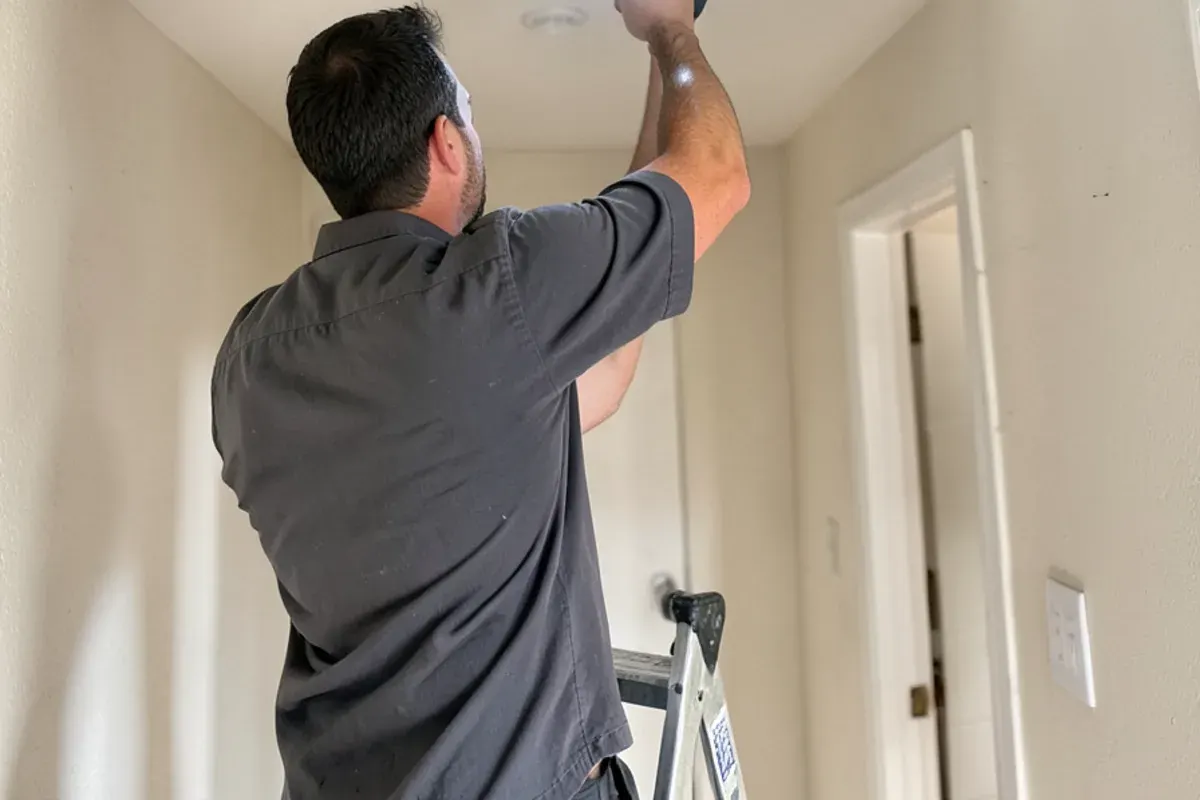
What Changes When the Cooler Comes Off the Roof
The two systems run on opposite logic, and that drives most of the work.
| Swamp cooler | Refrigerated air | |
|---|---|---|
| Air source | Outside air, pushed through the house | Indoor air, recirculated through a coil |
| Windows | Open for exhaust | Closed |
| Airflow | High: common sizes run 3,000 to 6,500 CFM | Far lower for the same house |
| Moisture | Adds humidity | Removes humidity |
| Duct needs | One outlet or a short run may do | Supply runs to rooms plus a return path |
| Filtering | Pads only | A filter in the return |
The missing piece is usually the return. A cooler blows air in and lets it escape through windows or ceiling vents. Refrigerated air has to pull the same air back to the coil, so the house needs a return grille and duct. Any relief vents or barometric dampers need closing or removing, too.
Duct Inspection: What We Check Before Quoting
We inspect before pricing, because guessing here costs real money. These are the questions the inspection answers:
- Does the cooler feed one ceiling outlet, or a trunk with branches?
- Are the ducts lined or insulated, and in what condition?
- Do the joints leak, and did years of damp air rust the metal?
- Will the supply runs deliver even airflow at the lower volume refrigerated air moves?
- Where can a return go?
Ducts built for a cooler's high airflow are not automatically right for refrigerated air. We run a Manual D check, the standard method for sizing ducts, against the new system. Expect one of four results: reuse with sealing, modify, replace, or go ductless.
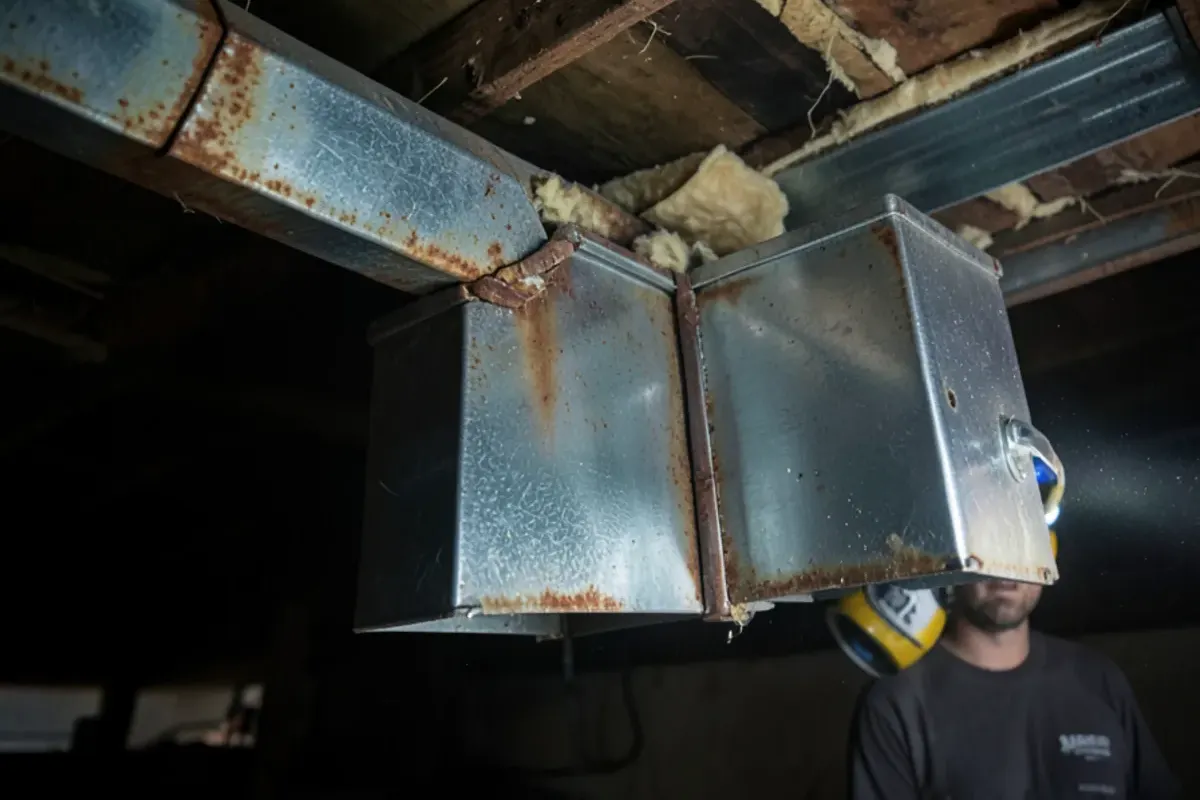
Swamp Cooler to Refrigerated Air Conversion: Albuquerque System Routes
Pick the route from what the inspection finds and how the house heats.
- Split system on your furnace. With a forced-air furnace, a coil and outdoor condenser are often the most direct route.
- Heat pump. One system for cooling and heating, useful with electric heat or an aging furnace. See heat pump installation.
- Packaged rooftop unit. It can reuse the roof location, with attention to roof load, curb fit and flashing. No yard space is needed.
- Ductless mini splits. The strongest fit when the ducts are poor or missing, as on some flat-roof and adobe homes.
- New air handler. Wall or floor furnace homes have no blower to share, so the job needs an air handler or a separate cooling system.
Some owners keep a working cooler for dry June days and run refrigerated air for the rest. That can work, as long as the two are properly separated with dampers and never run together.
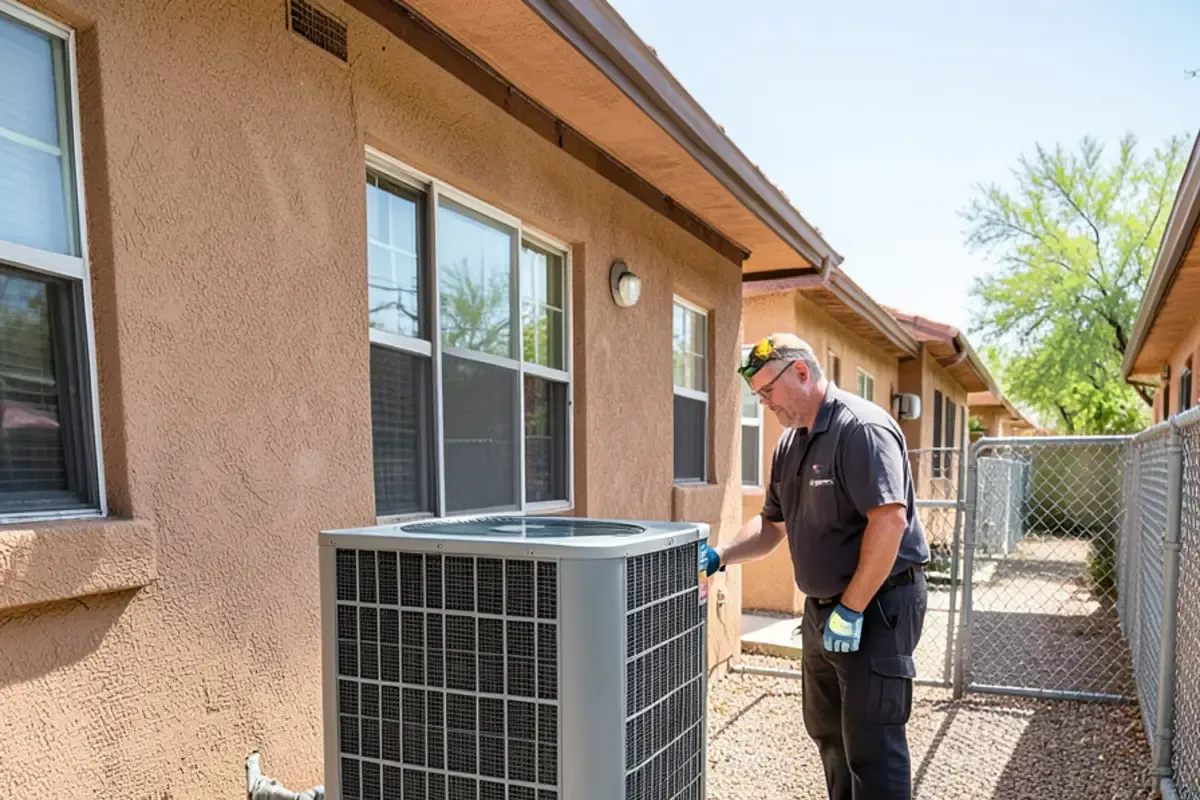
The Conversion, Stage by Stage
The order keeps the house protected and the roof closed.
- We inspect ducts, the electrical panel, the roof area and the heating system, then run a Manual J load calculation, which sizes the system room by room.
- You receive a free written estimate listing each stage, with a start date and duration.
- The permit comes next: the quote should state who pulls it, and ours does.
- We shut off and cap the cooler's water line, disconnect its power, remove the cooler and close the opening, or use it for the new unit.
- We modify the ducts, add the return and set the new equipment.
- We wire the circuit, set the charge and test airflow in each room.
The roof matters most. The old opening has to be sealed to match the roofing, and our written quote says whether that work falls to us or a roofer. The biggest time factors are ducts, returns and electrical work, so your quote states the duration.
After the switch, the routine changes. Pads, pan cleaning and winter shutdowns are gone, replaced by a filter to change and a condenser to keep clear, plus yearly AC maintenance.
What Your Conversion Estimate Includes
- The duct inspection findings and the load calculation result
- Equipment, any duct changes and the new return
- Cooler removal, water line capping and roof closure, and who does the roof work
- The circuit and any panel work
- The permit line, a start date and an expected duration
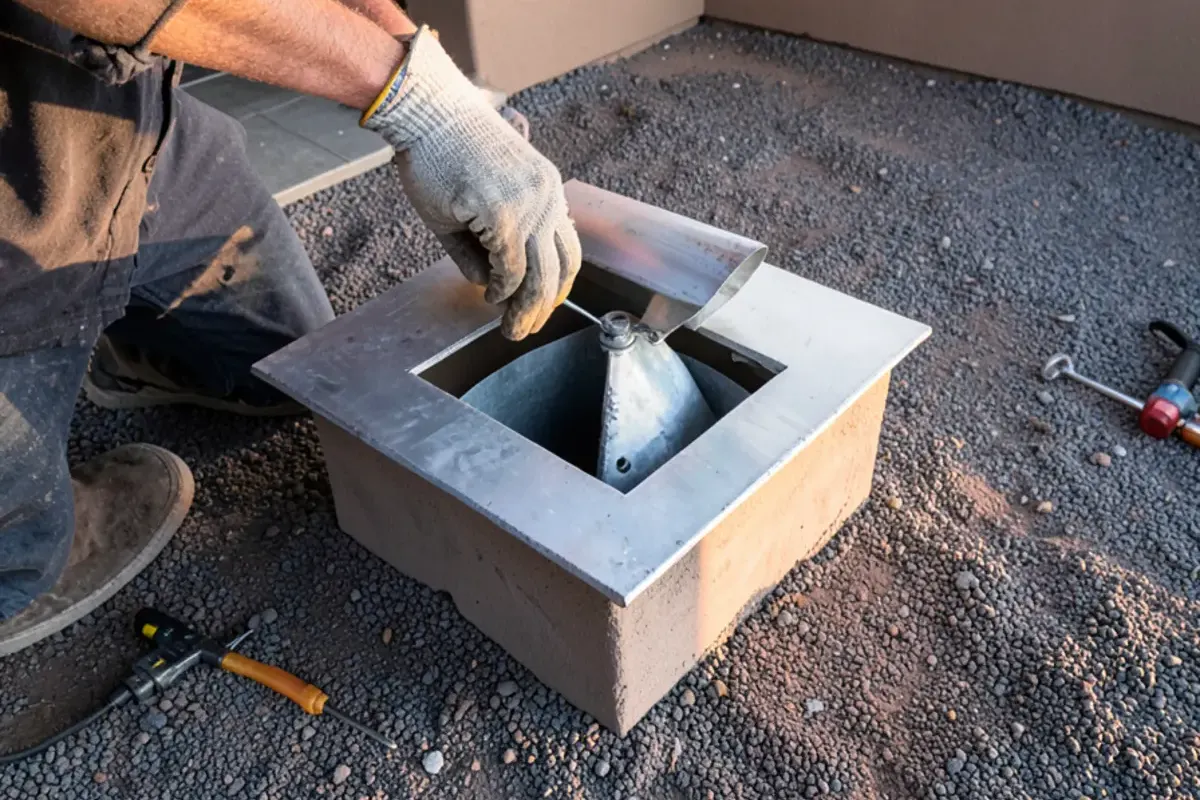
What Drives the Cost of Refrigerated Air?
We have no sourced Albuquerque price for a conversion, so we will not quote one here. RealCostIQ's 2026 full HVAC replacement estimate of $3,589 to $11,483 for most projects, a non-government figure, describes homes that already have a system in place. A conversion may add work that range does not capture. Get a written local quote.
The lines that move a conversion most:
- Ducts: sealed, modified or replaced, plus a new return
- A new circuit, and panel capacity in older homes
- Cooler removal and roof closure
- System type and tonnage from the load calculation
- Whether the heating system stays
Ask about flexible pricing options when we review the estimate.
Permits, Efficiency and the City Cooling Requirement
Plan on a mechanical permit, and verify the office and fee with the agency for your address, since parts of the South Valley are unincorporated Bernalillo County. New split central AC in the Southwest must meet the Department of Energy's minimum of 14.3 SEER2 under 45,000 BTU/h or 13.8 SEER2 at 45,000 BTU/h and up.
Inside Albuquerque, City Council passed O-24-59 in December 2024, adding a cooling requirement to the Uniform Housing Code. Reports differ on whether it reaches all housing or mainly rentals. Portable ACs, fans and mobile evaporative coolers do not count as a sole cooling source. A 2026 proposal sought tighter rules, and its outcome is unconfirmed, so check current status and enforcement with the City of Albuquerque. The rule applies only within the City.
For contractors, New Mexico's Construction Industries Division handles licensing. MM98 is its mechanical classification, and anyone can check a license on the state verification page.
Why Red Wrench for a Conversion
- Ducts before price. We inspect before we quote, so the estimate reflects your house.
- Both sides of the choice. We repair swamp coolers too, so we can tell you when converting is not worth it.
- Led by the owner. Over 20 years in plumbing, heating and cooling stand behind Dominic Montoya, who leads the company.
- Written numbers. The estimate is free, the price comes before work and NM CID License #413436 is on the state license lookup.
- Open feedback. Our 24 Google reviews are there to read.
None of the reviews shown here describes a conversion. They are general reviews of the company. We convert homes across the metro and the valley, including the South Valley, the North Valley and Bernalillo.
“Absolutely phenomenal! Hands down the best company I had the pleasure of hiring. Super helpful, experienced and above all extremely respectful to not just me and my family but my home as well! Would definitely hire again and hope someone reading this will give them the opportunity to be their final choice for any issue! Thanks again guys!”
“Friendly, dedicated to make sure that we were well taken care of. Provided quality products to replace our old products. Extremely satisfied with performance, products, and over all experience! Great job! Thank you Dominic!”
“Excellent experience with Red Wrench Co. They work timely and efficiently, no cutting corners and transparent. Delivered above expectations. Experience shows in the work they delivered! Highly recommended!”
Areas we serve
- South ValleyHomes from 1940 to 1969 may have cooler-era ducts and panels that need review first.
- North ValleyThe City cooling rule stops at city limits, so check which side your address sits.
- BernalilloTown review comes before CID issues the permit, so allow for it in the schedule.
- Los LunasWith 1,192 cooling degree days at valley level, monsoon weeks make refrigerated air worth pricing.
- Rio RanchoHomes from the 1960s and 1970s can keep roof coolers on leaky or undersized ducts.
- BelenHomes from the 1970s and 1980s lead the stock, so inspect roof openings closely.
- PeraltaMobile homes make up 31 percent of housing, so roof load decides what fits.
- Bosque FarmsIn a 1970s-heavy housing stock, panel capacity often decides which conversion route works.
- SocorroWith 1,205 cooling degree days at 4,585 feet, refrigerated air earns a serious look.
- All service areas
Refrigerated Air Conversion questions
Can I use my swamp cooler ducts for refrigerated air?
Sometimes. Cooler ducts were built for high airflow and often lack a return path, insulation or sealed joints, so they need an inspection first. Some can be sealed and reused with a new return. Others need modifying or replacing. A Manual D check against the new system settles it.
Will my electric bill go up after converting?
Expect it to rise in cooling season. A Department of Energy consumer guide says an evaporative cooler uses about a quarter of the energy of central air. Water use drops, and cooling steadies in humid weeks. A properly sized system and sealed ducts help limit the increase, but it will not match a cooler's bill.
What happens to the hole in my roof?
It gets closed and sealed, or reused if a packaged unit goes in the same place. Flat roofs need careful flashing, because a monsoon storm will find any gap. Your written quote says whether we handle that work or a roofer does, so nothing is left open or assumed.
How long does a swamp cooler conversion take?
It depends mostly on the ducts. Reusing sound ducts with a new return is the shorter version. Running new ducts, adding a circuit or working around a flat roof takes longer. Permit timing varies by office as well, and your written quote states the start date and expected duration.
Can I keep my swamp cooler as a backup?
You can, if the two systems are separated correctly. The cooler needs a closed damper when refrigerated air runs, and you still need to winterize and maintain it. Many owners prefer to remove it and close the roof opening. We will walk through both on the inspection.
Can a mobile home be converted to refrigerated air?
Often, though the plan differs from a site-built house. Roof load, duct layout and electrical capacity decide what fits, so a roof-mounted unit may not be the answer. MMCG Analytics counts 9,128 mobile homes in the city, and we look at each case on site before writing a quote. See our mobile home HVAC page.
Talk to Red Wrench about refrigerated air conversion
Call any hour. You get a straight answer, a free written estimate and the price before the work starts.
- NM CID License #413436
- 24 Google reviews
- Led by Dominic Montoya, over 20 years in the trade
- Free written estimates
Red Wrench Company, 5635 Paradise Blvd NW, Albuquerque, NM 87114, (209) 563-1270