

Swamp Cooler Repair in Albuquerque, NM
Pads, pumps, motors and water lines repaired, plus spring startups and winter shutdowns, with the price in writing first.
- NM CID License #413436
- 24 Google reviews
- Led by Dominic Montoya, over 20 years in the trade
- Free written estimates
Swamp cooler repair in Albuquerque usually comes down to water, airflow or the motor, and most of those faults are simple to find once someone is on the roof. Red Wrench Company repairs evaporative coolers, replaces pads, pumps and belts, and runs spring startups and winter shutdowns. Call (209) 563-1270 at any hour, and you will have a written price before work starts.
What Your Cooler Is Telling You
Match what you notice to the likely cause. These are the swamp cooler symptoms worth a call.
| What you notice | Likely cause |
|---|---|
| Weak air from the vents | Clogged pads, a slipping belt or too little exhaust opening |
| Warm air on a dry day | Dry pads from a dead pump, a stuck float or a blocked water line |
| Musty smell at startup | Old pads or standing water in the pan |
| Water on the roof or a ceiling stain | Overflowing pan, rusted-through pan or a failed float valve |
| Squeal or rumble | Worn belt, dry bearings or a tired motor |
| Humming with no airflow | Failed motor, capacitor or switch |
Shut the pump off and let the fan run if the air turns musty, and shut the whole unit down if water is reaching a ceiling.
Broken Cooler or Monsoon Humidity?
Check the weather before you assume a failure. A swamp cooler can only drop the air temperature by as much as the dry air allows. Pacific Northwest National Laboratory's Building America guide gives a typical drop of 15°F to 40°F, and the gap between the dry-bulb and wet-bulb temperature sets how much you get.
Albuquerque's average humidity is about 28% in June, then 42% in July, 45% in August and 49% in September, according to Visit Albuquerque's monthly chart. The National Weather Service puts average monsoon onset in the central Rio Grande valley around July 9. A healthy cooler that felt great in June can feel weak in August.
Then check the exhaust. A cooler pushes outside air through the house, so that air needs a way out. The same guide calls for 2 square feet of open relief per 1,000 CFM of airflow. Crack windows on the side of the house away from the cooler before you book a visit.
If the pads are wet, the blower is strong and windows are open, the system may simply be at its limit. That is when a refrigerated air conversion deserves a look.
What Wears Out a Swamp Cooler Here
Three local conditions do most of the damage.
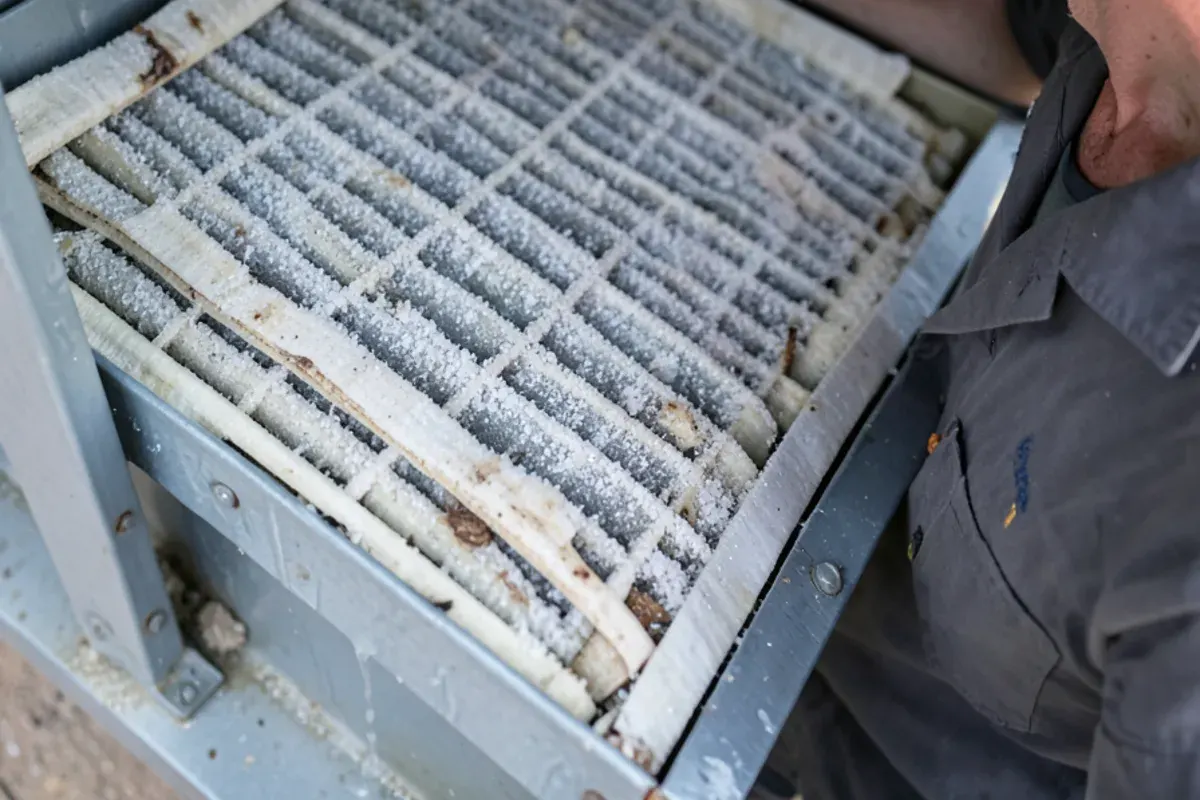
- Hard water. Evaporation leaves minerals behind, and the Water Authority calls local water moderately hard to hard, depending on the source blend. The Department of Energy notes that scale on pads cuts airflow and performance, and it also clogs the pump, the spider lines and the float.
- Wind and sun. Blowing dust loads pads and the pan, while roof exposure dries belts and fades cabinets.
- Freezes. Albuquerque averages about 113 freezing nights a year, so a water line left charged in winter can split. Coolers left open also leak house heat through the duct.
Older homes add a fourth factor: many coolers have simply been up there a long time, and a Department of Energy consumer guide gives them a life span of 15 to 20 years. Rust and calcium eventually win.
How We Repair a Swamp Cooler
Most jobs land in one of these fixes. Each has a trade-off, and we will explain it on the roof or in the driveway.
- New pads. Aspen pads cost less up front. Rigid media costs more but tends to resist scale better and lasts longer, and PNNL notes 12-inch media can reach 90 percent effectiveness or better.
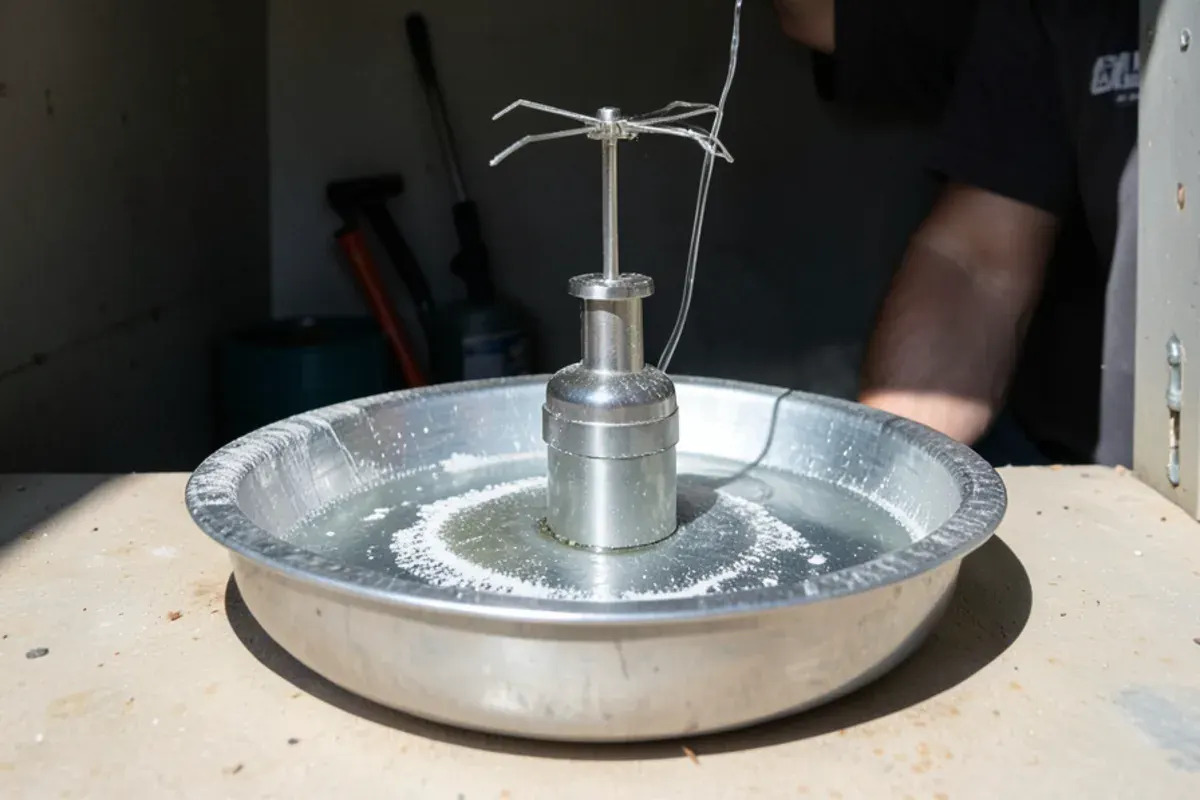
- New pump or spider lines. A cheap and fast fix for dry pads. If scale took out the pump, ask about bleed-off too.
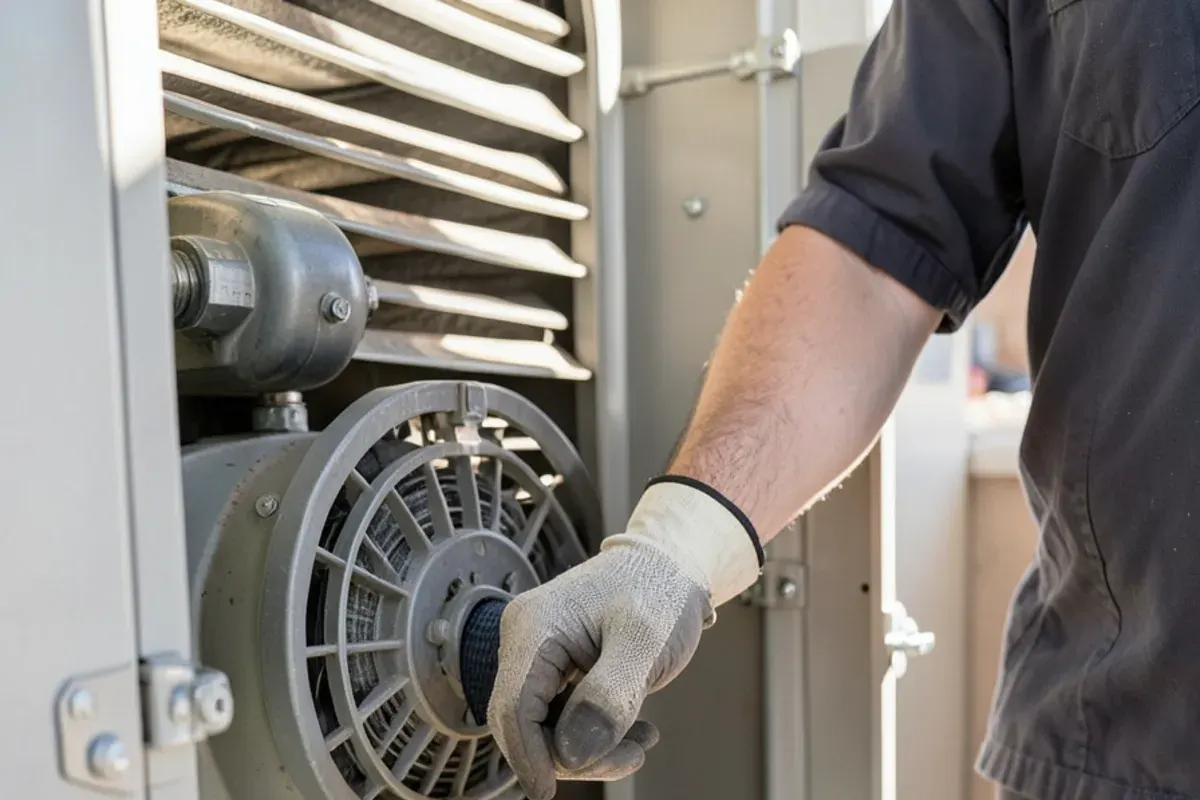
- Belt, bearings or motor. Worth doing on a sound cabinet. A new belt on a worn pulley will slip again.
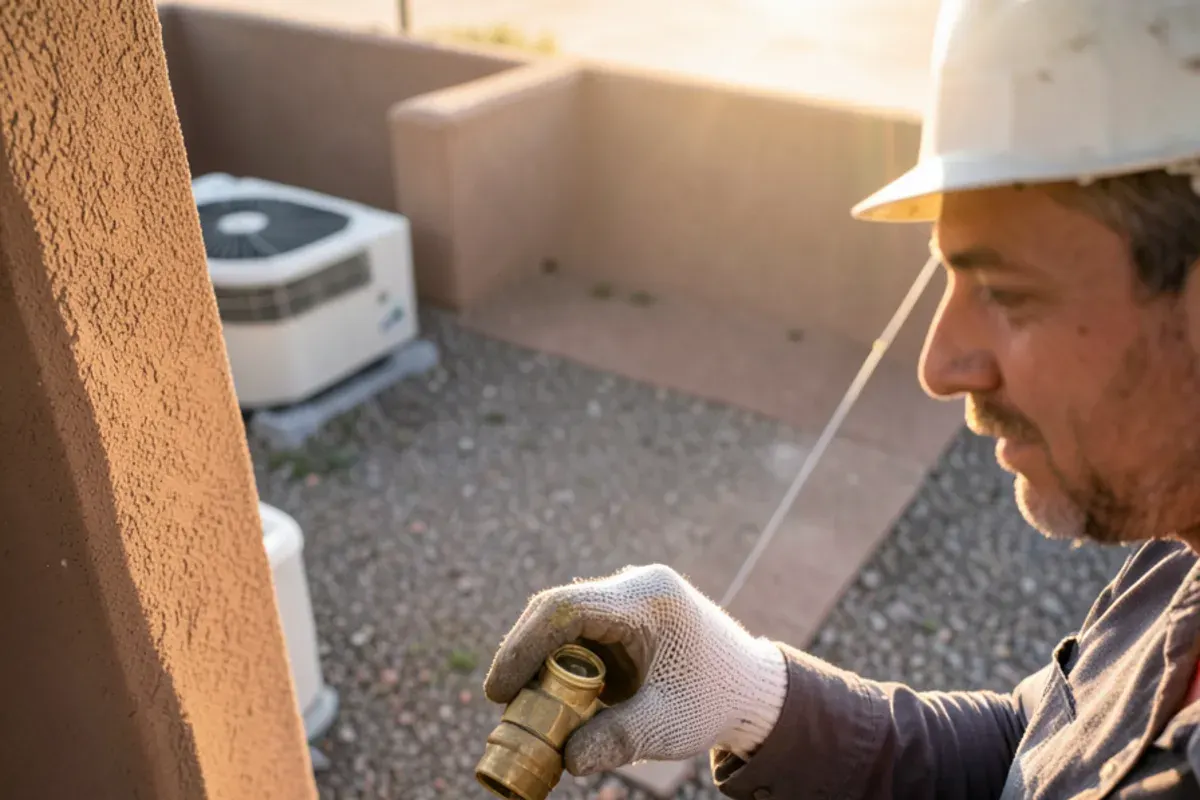
- Float valve or water line. A small part that protects the roof and ceiling from overflow.
- Bleed-off or a dump pump. Bleed-off fights scale by draining some recirculating water, which can raise water use by 50 percent. PNNL's example for a 1,500-square-foot Albuquerque home goes from about 7,261 gallons a year to about 10,892. A dump pump empties the pan on a timer, every 8 to 12 running hours, and uses less.
- A new cooler. Consider it when the pan is rusted through. PNM lists 2026 rebates of up to $400 on qualifying large advanced units with 12-inch rigid media while funds last, so verify with PNM before buying.
How a Swamp Cooler Visit Runs
We work toward same-day service on cooler calls during hot spells. On the visit, the steps run in this order.
- We ask what changed and what you have noticed from inside the house.
- We shut power off and open the cabinet, then inspect the pads, pan, float and water line.
- We power up and test the pump, watching how evenly water reaches each pad.
- We check the belt, bearings, motor amperage and both speeds, then look at the roof curb, duct connection and any leaks below.
- We write up the repair and the price, then do the work once you approve it.
- We wet the pads, run the blower and confirm air temperature at a vent inside.
If the part is on hand, the repair usually finishes that visit. New aspen pads can smell like wood for a short while, and that fades. Check for wet spots on the ceiling over the next few days, and call if you see any.
What a Cooler Visit Includes
- A plain explanation of what failed and why
- A free written estimate, with the price before work starts
- Repairs limited to what you approved
- A wet-pad run with an air temperature reading at an inside vent
What Changes the Bill for Swamp Cooler Repair in Albuquerque?
We do not publish a flat price, because the fix varies from a belt to a whole cooler. These are the items that change it:
- Which parts failed, and pad type
- Roof access, including steep pitches and tall homes
- Water line or valve work
- Whether a startup or shutdown is part of the same trip
- After-hours timing
The written estimate is free, and we go over the price with you first. That way you can weigh a major repair against a new cooler or a move to refrigerated air.
Licenses and Permits for Cooler Work
HVAC licensing in New Mexico sits with the Construction Industries Division, part of the Regulation and Licensing Department. MM98 is its mechanical classification, and every company license rests on a licensed individual called the Qualifying Party.
Repairs and full replacements can differ here. City of Albuquerque mechanical permits cover cooling work and equipment installation, so if the plan is a new cooler, verify the requirement and fee with the agency for your address.
Why Red Wrench for Evaporative Cooler Service
- We work on what you own. Swamp coolers are part of our regular service mix, with refrigerated air, heat pumps and mini splits.
- Long trade experience. With over 20 years of experience in plumbing, heating and cooling, Dominic Montoya leads the company.
- Plain answers. We will tell you whether the cooler is broken or just out of dry air.
- Records you can read. Search NM CID License #413436 on the state license lookup, and see our 24 Google reviews.
None of the reviews shown here mentions a swamp cooler. They are general reviews of the company.
“Great service, quick response. Thank you”
“Excellent work and very quick! Highly recommend to use this company!”
“Book them asap! Great professional service from people with integrity!!”
Spring Startup and Winter Shutdown
Two visits a year prevent most of the calls above. PNNL's guide says to service a cooler at least twice a year, and to empty the pan when it will sit idle for more than a few days, since standing water can harbor mosquitoes and bacteria.
Startup in spring means new or cleaned pads, a clean pan, a tested pump and float, and a belt check. Shutdown in fall means closing the water at the source, draining the line and pan, disconnecting the pump and covering the unit, then tying the cover against wind. Before the first freezing night is the deadline.
We service coolers across the metro and south along the valley, including the South Valley, the North Valley and Bosque Farms.
Areas we serve
- South ValleyHomes from 1940 to 1969 may carry long-serving coolers, so check pans for rust.
- North ValleyFourth Street joins three jurisdictions, so the City cooling rule may not reach your cooler.
- Bosque FarmsThe nearby Los Lunas station logs 152 freezing nights, so drain water lines early.
- BelenRoofs from the 1970s and 1980s need a close check around the cooler curb.
- Rio RanchoFourteen deep wells supply the city, and that water leaves scale on pads and pans.
- CorralesPrivate wells feed many coolers, so a weak well pump can mimic a failed cooler.
- Los LunasWith 152 freezing nights a year, an early water-line shutdown here is worth booking.
- PeraltaAlmost a third of homes are mobile, where cooler weight and mounting need checking.
- All service areas
Swamp Cooler Repair questions
Why is my swamp cooler blowing warm air?
Dry pads are the most common reason. A failed pump, a stuck float or a clogged water line keeps water off the pads, so the blower moves plain outside air. Humid monsoon days can also weaken a healthy cooler. Look at the pads first. If they are dry while it runs, call.
How often should swamp cooler pads be replaced?
Plan on checking them every spring and replacing them when they are crusted, torn or smelly. Hard water sets the pace, so aspen pads may need yearly attention here. Rigid media tends to last several seasons. A cracked or scaled pad lets air pass without cooling it, so it costs you comfort.
Why does my swamp cooler smell musty?
Old pads, a dirty pan or stagnant water are the usual causes. Running the fan without the pump can dry things out for a short time, but the fix is cleaning the pan and replacing the pads. If the smell returns quickly, we check the bleed-off and the water line.
When should I start up and shut down my cooler?
Start up in spring, once the risk of a hard freeze has passed, and shut down in fall before the first freezing night. Albuquerque averages about 113 freezing nights a year, and a charged water line can split. Booking both visits early helps you avoid the first-heat rush.
Is my swamp cooler worth repairing?
Usually, if the cabinet and pan are sound. Pads, pumps, belts and floats are low-cost parts. A rusted-through pan, a failed motor on an old cabinet or weak cooling in humid weeks changes the math. We will give you a repair price, and you can compare a new cooler or conversion.
Does a swamp cooler meet Albuquerque's cooling requirement?
It depends on the unit, so confirm with the City of Albuquerque. Under O-24-59, passed in December 2024, mobile evaporative coolers do not count as the sole cooling source. Reports differ on who the rule covers, and current enforcement may change. The requirement applies only inside the City, not in nearby towns.
Talk to Red Wrench about swamp cooler repair
Call any hour. You get a straight answer, a free written estimate and the price before the work starts.
- NM CID License #413436
- 24 Google reviews
- Led by Dominic Montoya, over 20 years in the trade
- Free written estimates
Red Wrench Company, 5635 Paradise Blvd NW, Albuquerque, NM 87114, (209) 563-1270