

AC Repair in Albuquerque, NM
Warm air, a humming condenser or ice on the line? We diagnose it, explain it and put the price in writing before we fix it.
- NM CID License #413436
- 24 Google reviews
- Led by Dominic Montoya, over 20 years in the trade
- Free written estimates
AC repair in Albuquerque starts with finding the part that actually failed, because warm air at the vents can come from a small capacitor or a seized compressor. Red Wrench Company tests the system, tells you what we found in plain English and gives you a written price before any repair starts. We answer the phone 24 hours a day at (209) 563-1270.
Signs Your AC Needs Repair, Not Just a New Filter
Call when the system shows a symptom that a filter and a thermostat check will not clear. These are the calls we get most in an Albuquerque summer:
- Warm air from the vents while the outdoor unit runs
- A condenser that hums but the fan does not spin
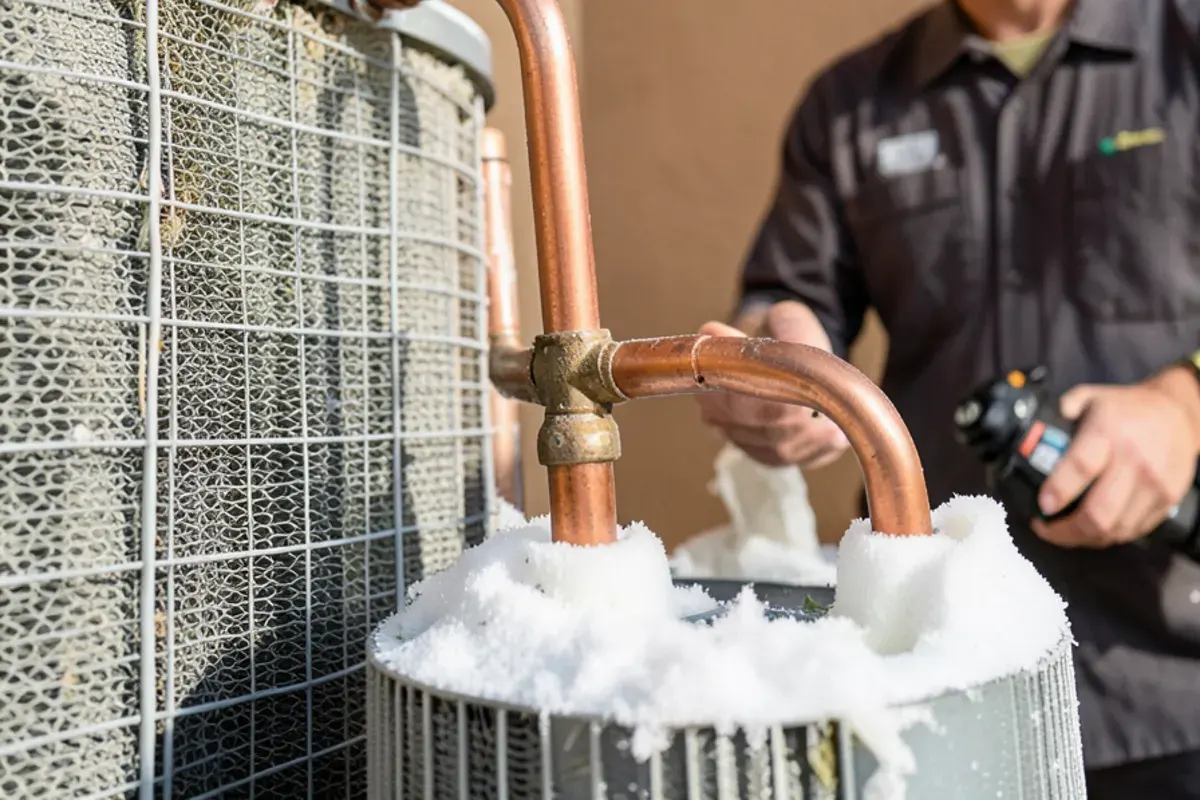
- Ice on the refrigerant line or the indoor coil
- Water around the air handler or a wet ceiling stain
- Grinding or squealing from the blower
- A system that starts and stops every few minutes
- Rooms at the end of the house that never catch up
Shut the system off if you see ice or hear grinding. Running a frozen coil or a stalled fan can turn a small repair into a compressor job.
Why Do Albuquerque Air Conditioners Fail in Peak Heat?
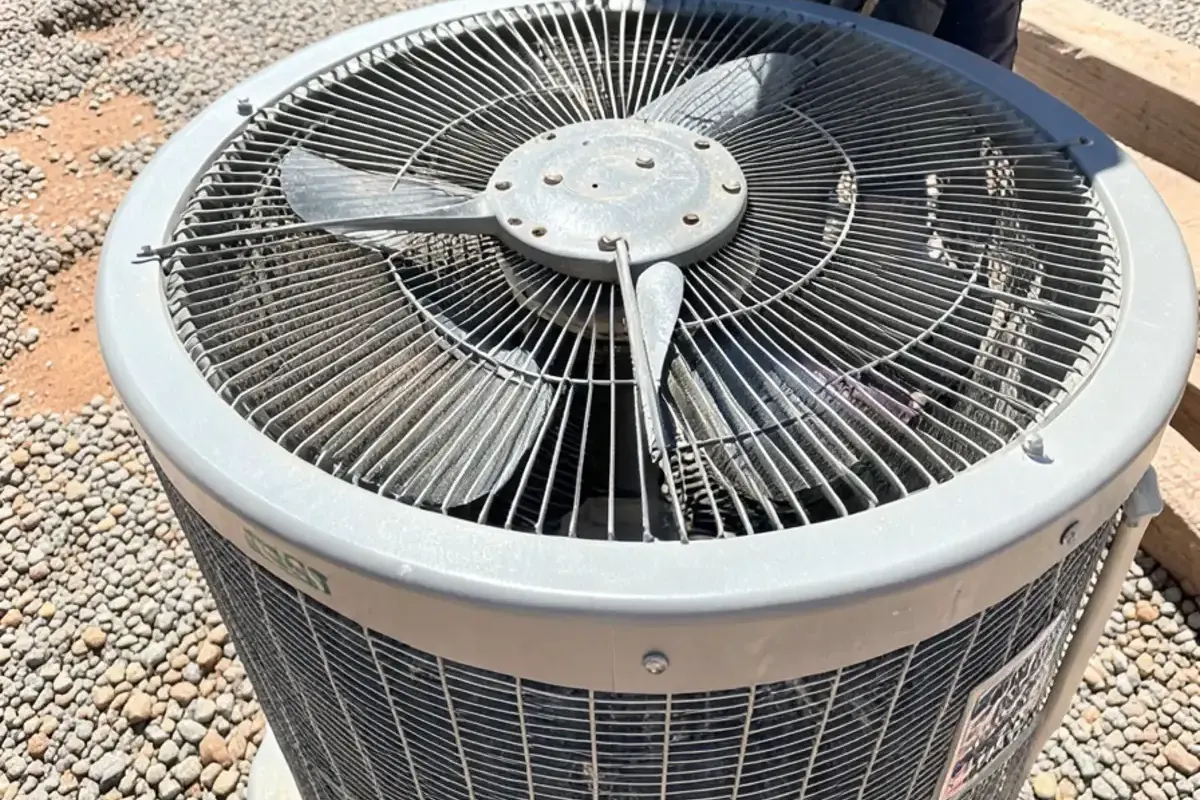
Long, hot stretches find the weak part. National Weather Service Albuquerque logged 30 days at or above 90°F in August 2026 against a normal of 16.5, so a capacitor or contactor that would last a mild summer can quit in a hot one.
Local conditions add to it. Blowing dust packs condenser coils, which raises head pressure and heat at the compressor. Strong sun on a west-facing wall cooks the electrical parts inside the service panel. Monsoon storms bring power flickers that are hard on boards and capacitors. Many homes here date to the 1980s or earlier, and an older system that was marginal when new has little margin left.
How We Find the Fault
We work from the outside in and test before we replace anything.
- We ask what you saw, heard and smelled, and read the thermostat history if it has one.
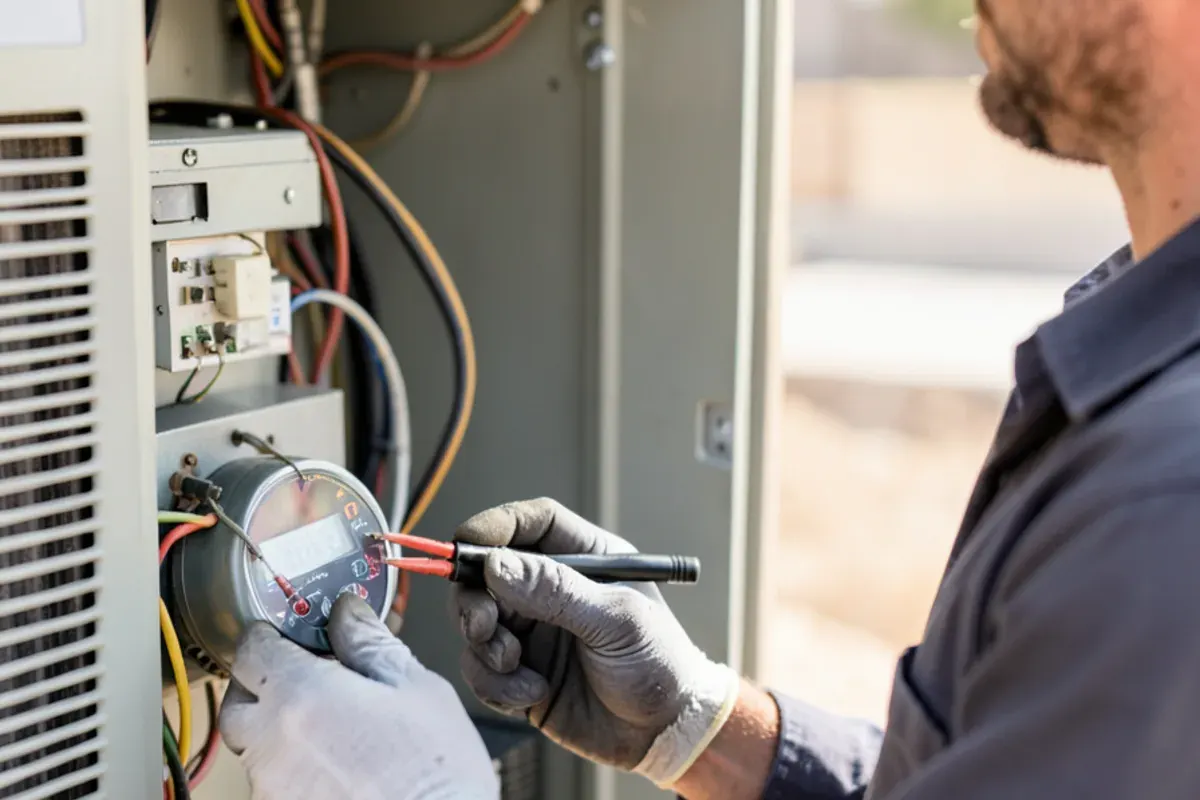
- We check power at the breaker and disconnect, then the capacitor reading and contactor.
- We read refrigerant pressures and temperatures to judge charge and airflow.
- We inspect the evaporator coil, blower, filter and condensate drain.
- We measure compressor amperage when the symptoms point there.
- We show you the failed part or the reading, then write up the options.
Repair Options and Their Trade-Offs
Most no-cool calls end in one of these fixes. The right one depends on what failed and how old the system is.
| Problem | Typical fix | Trade-off to weigh |
|---|---|---|
| Failed capacitor or contactor | Replace the part | Quick and low cost; check why it failed if it is the second one |
| Refrigerant leak | Find and repair the leak, then recharge | A top-off with no leak repair only buys weeks; refrigerant is not consumed |
| Frozen evaporator coil | Thaw, then correct the airflow or charge issue | Fixing ice without fixing the cause brings it back |
| Clogged condensate drain | Clear and flush the line, test the safety switch | Inexpensive, and it protects ceilings |
| Failed blower motor | Replace the motor or control | Worth it on a sound system |
| Failed compressor or coil | Replace the part or the system | On an older unit, price AC replacement on the same visit |
What a Repair Visit Looks Like
We work toward same-day service during the summer rush, and the phone is answered around the clock. On the visit, the technician diagnoses the system first and writes up the price before touching a repair. If the part is on the truck, the repair usually finishes on that visit. If it has to be ordered, we tell you when it should arrive and what, if anything, can keep the house cooler until then.
Before leaving, we run the system through a full cooling cycle and confirm the supply air temperature has dropped as it should. You get a plain record of what failed and what was done.
What Every Repair Visit Includes
- A diagnosis, with the failed part or the reading shown to you
- A free estimate in writing, ahead of the repair
- Repair and replacement prices side by side when an older unit raises the question
- A full cooling cycle and a supply air temperature check
- A plain record of the work
What Changes the Price of AC Repair in Albuquerque?
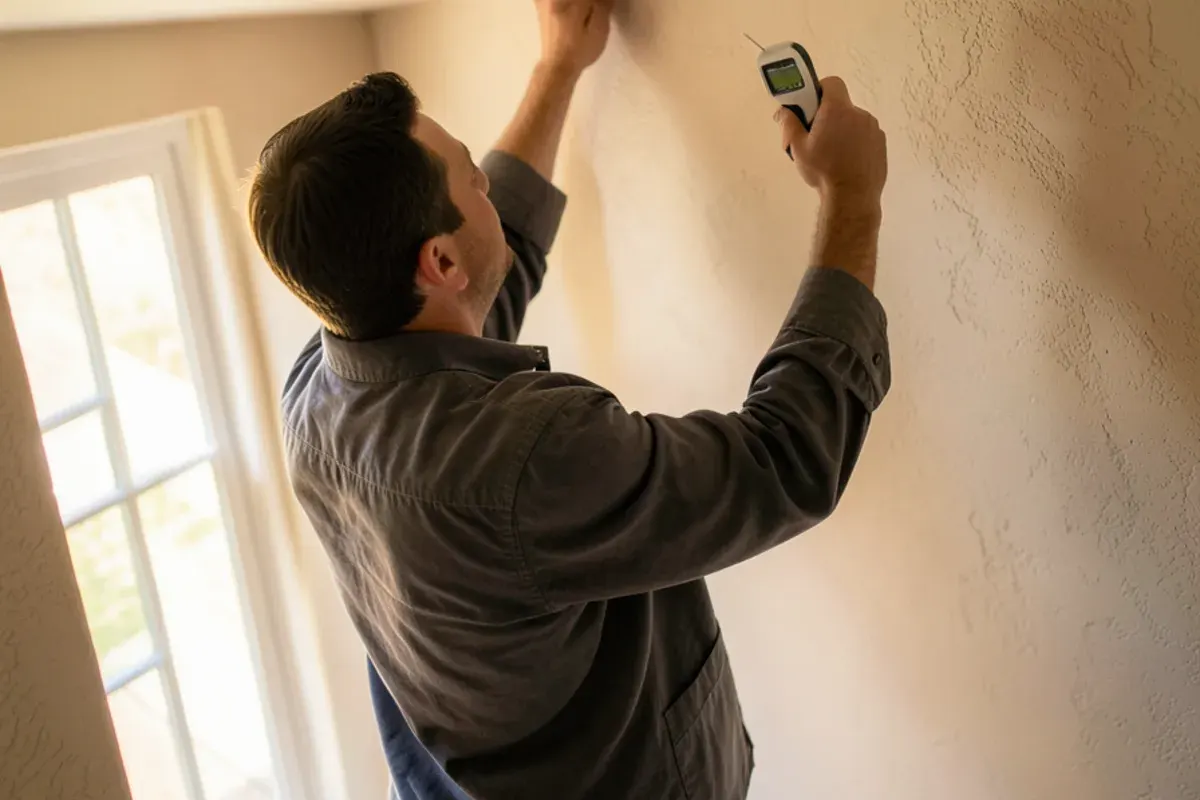
We do not publish a flat repair price, because the part and the access decide it. These are the lines that move the number:
- The part itself, and whether it is in stock or has to be ordered
- Refrigerant type and how much the system needs after the leak is fixed
- Access, such as a roof-mounted package unit or a tight attic
- After-hours timing
- System age, which can make parts harder to find
The written estimate is free and you see the price before work starts. Our guide to AC repair cost in Albuquerque walks through the factors in more detail.
Licenses and Local Rules for AC Repair
Check the license before a technician touches the refrigerant circuit. HVAC work in New Mexico falls under the Construction Industries Division of the Regulation and Licensing Department. MM98 is the mechanical classification, and the Qualifying Party is the licensed individual behind a company's license. EPA adds its own line: refrigerant may not be knowingly released during service or repair.
If the fix becomes a new system, a mechanical permit applies. The office and fee depend on your address, so verify both with the agency.
Inside Albuquerque, O-24-59, passed in December 2024, allows portable units only as a temporary stand-in while a permanent system is repaired or replaced. Accounts vary on how far the ordinance reaches, from all housing to mainly rentals, so check its status and enforcement with the City of Albuquerque. Other towns are not covered.
Why Red Wrench for Air Conditioner Repair
- Owner-led. Dominic Montoya leads the company and has over 20 years of experience in plumbing, heating and cooling.
- A license you can check. NM CID License #413436 is searchable on the state license lookup.
- Price before work. The estimate is free and in writing.
- Reviews you can read. 24 Google reviews, including customers who called us for AC trouble.
“Quick troubleshooting of my AC unit. Found to be low on Freon. Filled it up and back in business.”
“Had a entirely new unit installed new furnace new tubing all the works . Excellent job great communication even loaned me 3 window units to use while my ac was down. And installed a new thermostat for me . Highly recommend . A+++”
How to Prevent the Next No-Cool Call
A clean filter and a clean condenser prevent more breakdowns than anything else. Change the filter on schedule, keep two feet of clearance around the outdoor unit, and rinse dust off the coil gently in spring. Book AC maintenance before July, when monsoon humidity and peak heat stress older systems the most.
We repair air conditioners across Albuquerque and nearby communities, including Rio Rancho, the North Valley and the South Valley.
Areas we serve
- Rio RanchoHomes span 1962 to now, so a no-cool call can mean very different equipment.
- North ValleyHomes on former farmland vary widely, so we confirm the system type before the visit.
- South ValleyMany homes date from 1940 to 1969, so older electrical parts get checked first.
- CorralesPrivate wells and septic fields shape where a repaired condensate drain can safely discharge.
- Los Ranchos de AlbuquerqueRio Grande Blvd narrows north of Griegos, so a plate photo helps the first trip count.
- BernalilloTown and county addresses mix here, which matters if a failed unit needs replacing.
- Los LunasSystems from the 2000s are aging together, and 1,192 cooling degree days add run hours.
- BelenOver half of homes predate 1980, so older condensers and wiring get a closer look.
- All service areas
AC Repair questions
Why is my AC running but not cooling the house?
Low airflow, low refrigerant or a failed outdoor fan are the usual causes. Check the filter and confirm the condenser fan is spinning. If the filter is clean and the air is still warm, shut the system off and call. Running it with a stalled fan or a frozen coil risks the compressor.
How do I know if my AC capacitor is bad?
A humming condenser with a fan that will not start is the classic sign. Some capacitors also bulge at the top or leak oil. A meter reading confirms it in minutes. Capacitors hold a charge even with the power off, so leave testing and replacement to a technician.
Is it normal for an air conditioner to need more refrigerant every year?
No. Refrigerant circulates in a sealed loop and does not get used up, so a system that needs a recharge has a leak. Recharging without finding it means paying again later. We locate the leak first and price the repair before adding refrigerant.
Should I repair or replace an old AC unit?
Repair one failed part on a sound system. Price replacement when the compressor or coil fails on an older unit, or when the system is SEER 13 or lower. We can write up both options on the same visit so you can compare them against the local replacement range.
Why is water leaking from my air conditioner?
A clogged condensate drain is the most common reason, and a frozen coil that is thawing is the second. Shut the system off to limit damage, and check for a wet ceiling if the air handler is in the attic. Clearing the line is usually a quick repair.
Do you repair AC units that you did not install?
Yes. We service the systems Albuquerque homes already have, whoever installed them. Photograph the model plate on the outdoor unit before you call, and we can often tell what parts the job is likely to need before we arrive.
Talk to Red Wrench about ac repair
Call any hour. You get a straight answer, a free written estimate and the price before the work starts.
- NM CID License #413436
- 24 Google reviews
- Led by Dominic Montoya, over 20 years in the trade
- Free written estimates
Red Wrench Company, 5635 Paradise Blvd NW, Albuquerque, NM 87114, (209) 563-1270