

Fall Furnace Checklist Before the First Cold Night
Test the furnace on a mild afternoon, not at midnight in a freeze. Here is what to check and in what order.
- NM CID License #413436
- 24 Google reviews
- Led by Dominic Montoya, over 20 years in the trade
- Free written estimates
By Dominic Montoya, Owner of Red Wrench Company. Published , updated .
A furnace maintenance checklist does its best work before you need heat. On a mild fall afternoon, change the filter, clear the vents, test your carbon monoxide alarms and run a full heating cycle while you can still book a technician calmly. Then have a professional inspect the burners and heat exchanger, which no homeowner can do by eye.
Why Run the Furnace Before You Need It?
The first cold night is the worst time to learn the igniter failed. Albuquerque averages about 113 freezing nights a year, so a furnace that quits in October has a long season ahead of it.
A test run costs you a few minutes. It exposes ignition faults, a dead thermostat and a weak blower while the house is still at a livable temperature. ENERGY STAR recommends a heating check in fall for the same reason, since contractors get busy once winter arrives.
First-freeze dates swing widely, so the calendar is a poor guide. National Weather Service Albuquerque lists the Sunport's first fall freeze as October 26 in 2020, October 25 in 2022, October 31 in 2024 and November 30 in 2025. Low ground near the river runs colder. NWS normals for 1991 to 2020 put the average first freeze at November 3 at the Sunport, October 24 in the South Valley and October 17 at Corrales, just upriver from the North Valley.
The Fall Furnace Maintenance Checklist
Work through this in order, with the thermostat off until step seven.
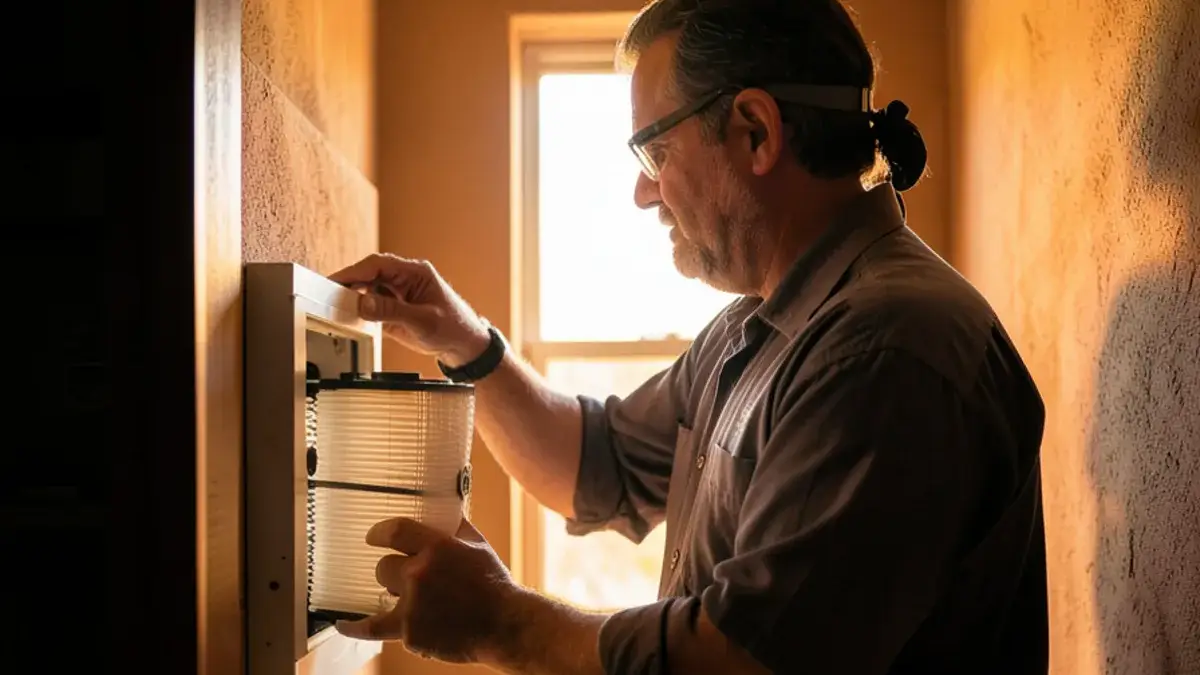
- Change the filter. A clogged filter chokes airflow and overheats the furnace, so start the season with a fresh one and look at it monthly through winter.
- Clear the area. Keep paint, solvents, boxes and laundry away from the furnace and any water heater. These closets become storage over summer.
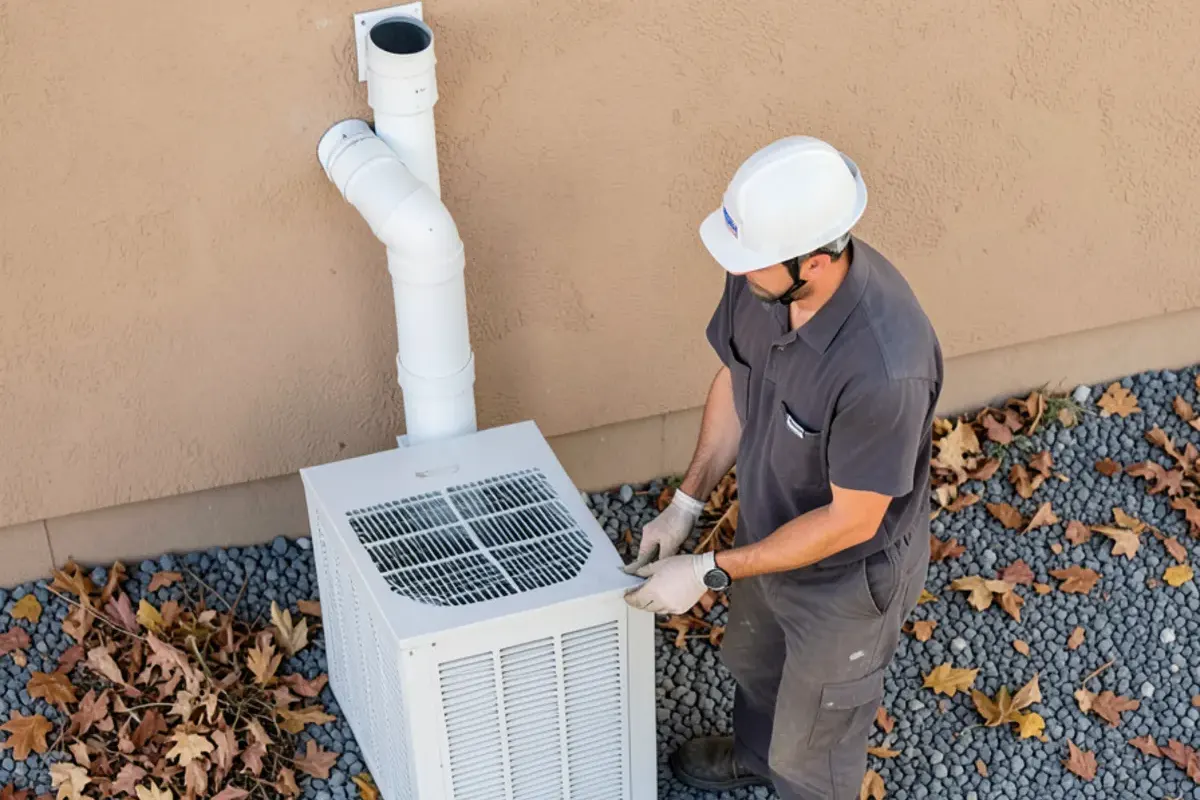
- Check the vents outside. Find the flue or the two plastic pipes on a high-efficiency unit. Remove nests, leaves and weeds. Nothing should block the outlet.
- Look at the flue pipe. Metal vent sections should be connected and free of rust holes or gaps. Do not repair them yourself.
- Open supply and return registers. Rugs and summer furniture tend to end up on top of them.
- Test CO alarms and smoke alarms. Press the test button and replace batteries. The Consumer Product Safety Commission says to install battery-operated or battery-backup CO alarms on every level of the home and outside sleeping areas.
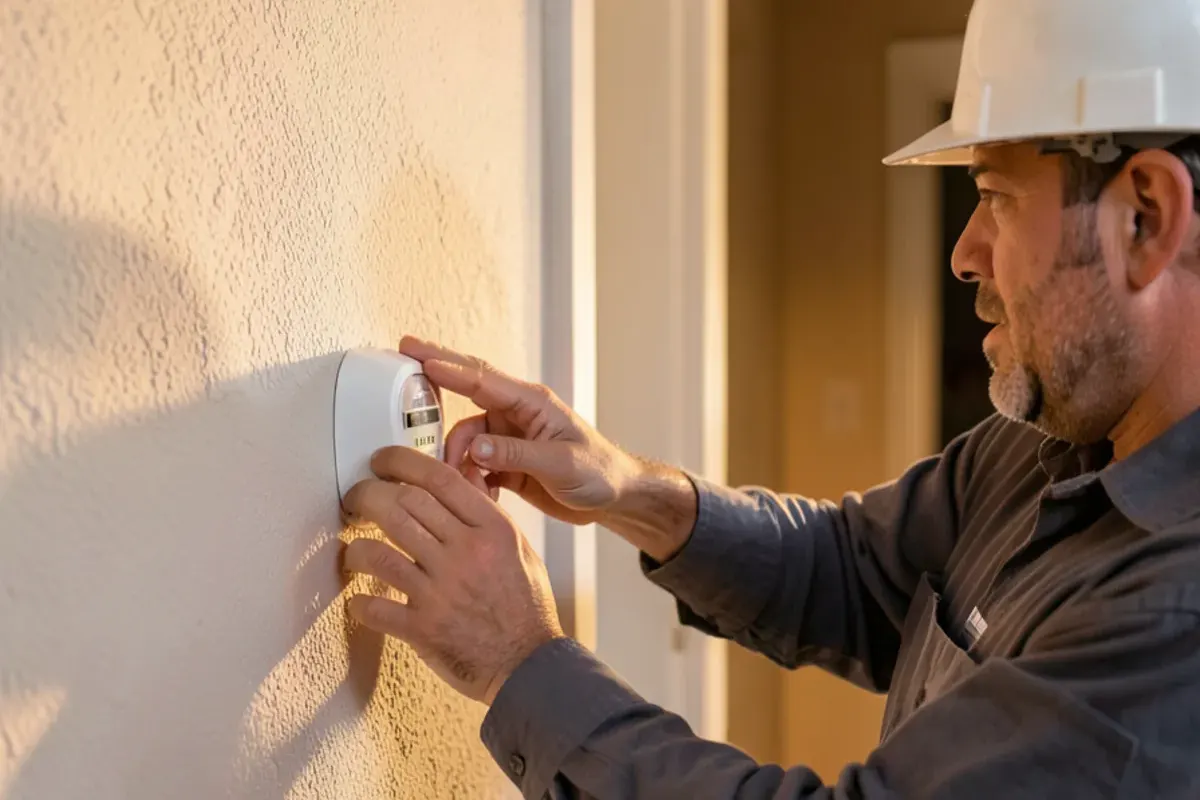
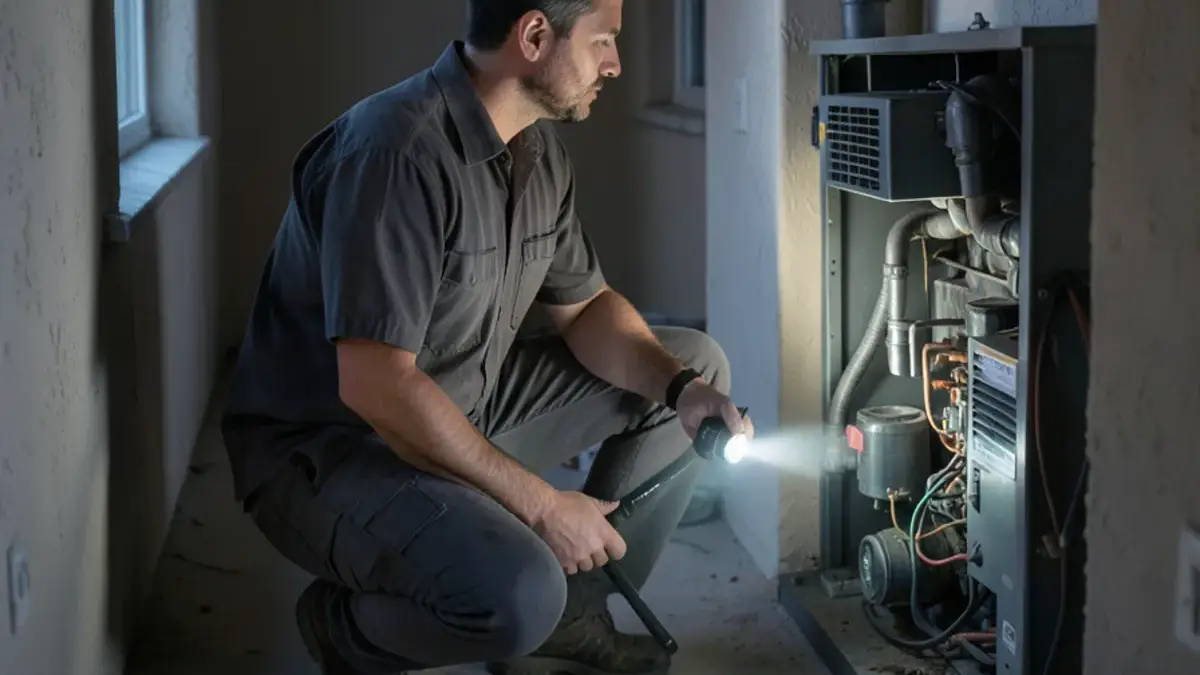
- Run a test burn. Set the thermostat a few degrees above room temperature and stay nearby. You should hear the inducer, see ignition and feel warm air after a short delay.
- Watch one full cycle. Let the thermostat satisfy and confirm the burners go out and the blower stops on its own.
Expect a dusty, slightly burnt smell for the first few minutes. That is dust cooking off the heat exchanger, and it should fade. A rotten-egg smell, a sharp electrical smell or a smell that stays is different. Shut the system off.
What Does a Technician Add That You Cannot?
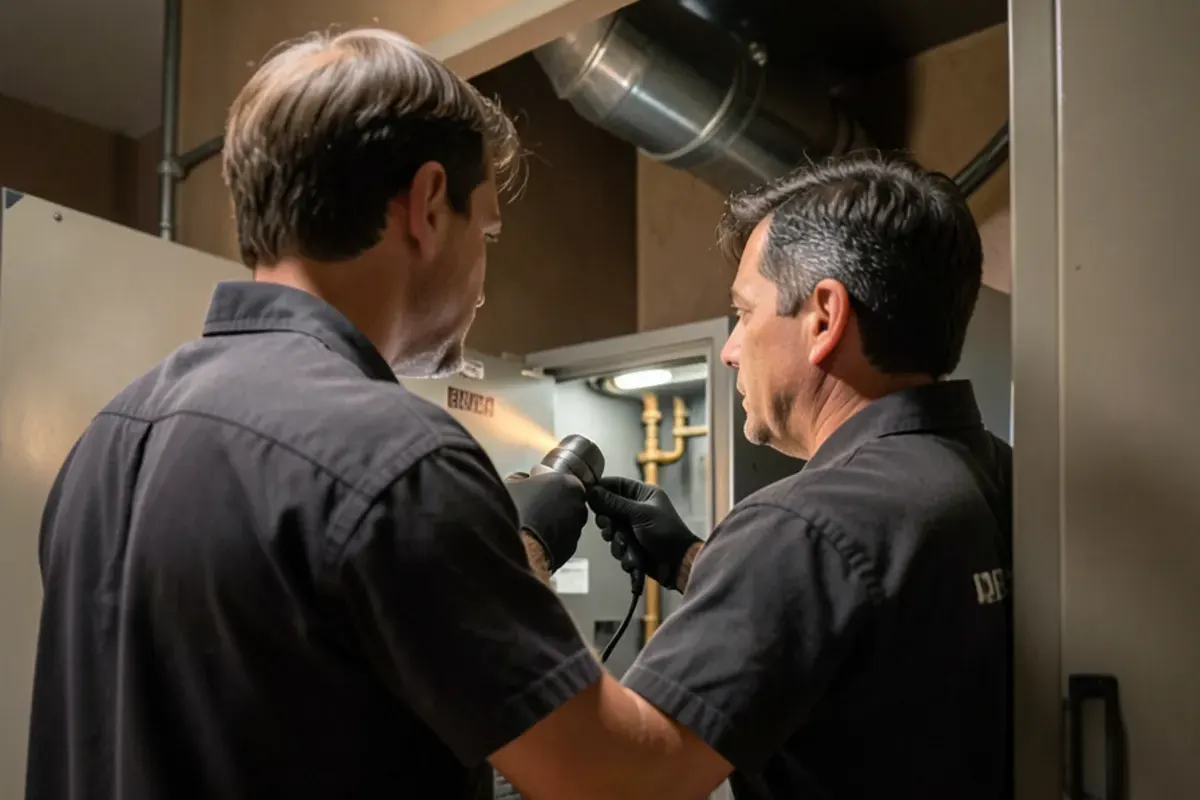
A proper furnace maintenance visit reaches parts a homeowner should not open. ENERGY STAR lists these among the heating items a contractor should check:
| Check | Why it matters |
|---|---|
| Gas or oil connections | A poor connection is a fire and health hazard |
| Gas pressure | Wrong pressure affects burn quality and heat output |
| Burner combustion | A dirty burner wastes fuel and can burn unsafely |
| Heat exchanger | A cracked exchanger is a fire and safety concern |
| Electrical connections and motors | Weak parts tend to fail under load |
| Controls and safety cycle | Confirms that the furnace starts and shuts down correctly |
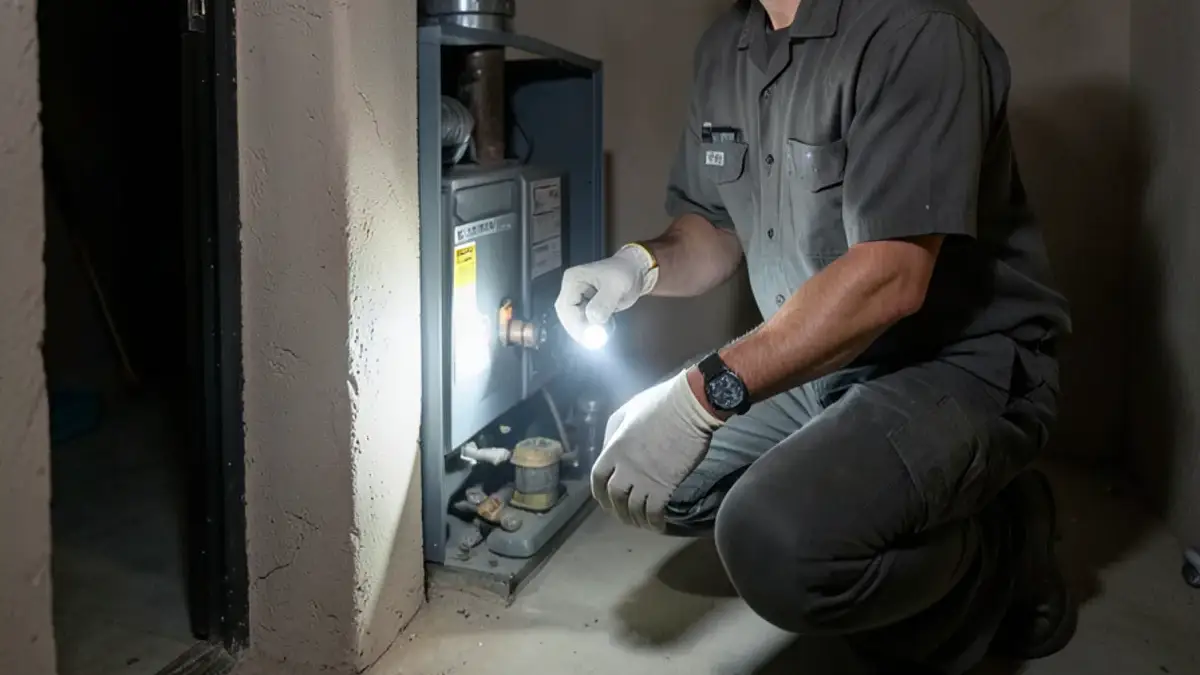
The heat exchanger is the one to take seriously. It separates combustion gases from your breathing air, and its condition cannot be judged from the outside of the cabinet. When a technician finds a problem there, ask to see the evidence, and ask for the written estimate before any decision.
What Local Rules Should You Know About Heat?
Albuquerque sets a floor for heating. City Code § 14-3-3-2 requires heating that holds 68°F three feet above the floor in habitable rooms, and it bars unvented fuel-burning heaters. That rule applies inside City limits.
Los Ranchos de Albuquerque is its own village, so check with the village on what applies there. The safety point travels everywhere, though: never use an oven or an unvented fuel-burning heater to get through a cold night. Larger North Valley homes may also have more than one furnace or a separate unit for an addition. Test each one, since one working system can hide a failed one until the cold arrives.
What We Tell Customers Each Fall
- Do this in September or early October. Waiting for the first freeze means joining the crowd.
- Keep the model plate photographed. A picture on your phone speeds up diagnosis and parts lookup.
- Do not reset a lockout over and over. One reset is reasonable. After that, you are only hiding a fault that needs a diagnosis.
- If it is older, ask the question. ENERGY STAR suggests having equipment over 10 years old evaluated by a professional, and that may be a good time to price furnace repair against replacement.
- Treat a gas smell as an emergency. Leave first, then call. Our guide on what to do if you smell gas near the furnace covers the steps, and emergency furnace repair is available around the clock by phone.
What a Test Burn Can and Cannot Prove
A clean test burn is useful and limited. It proves the furnace lit today. It says nothing about a hairline crack in the heat exchanger, gas pressure that has drifted or an igniter that will crack in January. Here is how we weigh the choices customers actually face.
| Decision | The case for it | The honest downside |
|---|---|---|
| Homeowner checks only | Free, and catches filters, vents and alarms | Cannot see combustion, gas pressure or the exchanger |
| Yearly professional check | CPSC and ENERGY STAR both advise it for fuel-burning heat | It costs money, and no inspection stops every failure |
| Booking early | Easier scheduling before the first cold spell | You pay for a visit on a day with no symptoms |
| Repairing an older furnace | Lower cost today | Every other part keeps aging around the new one |
Alarms are the backstop for all of this. CPSC says interconnected alarms are best, because when one sounds they all sound. They cost more than a single battery unit, and one alarm outside the bedrooms is still far better than none. Read the replace-by date on the back too, since sensors age. CPSC counts more than 200 U.S. deaths a year from accidental, non-fire CO poisoning linked to consumer products.
An Hour Now Beats a Night Without Heat
Change the filter, clear the vents, test the alarms and burn the furnace once on a mild day. Then book the inspection for the parts you cannot see. An hour of attention in fall heads off a surprising share of the no-heat calls that come later in the year, when everyone is calling at once.
Areas we serve
Common questions
Why does my furnace smell like burning the first time I turn it on?
Dust settled on the heat exchanger and burners over summer, and it burns off during the first run. Open a window and let it clear for a few minutes. It should not last. A smell that stays, or one like rotten eggs or hot wiring, means shut the system off. Leave the house and call if you suspect gas.
Can I skip a furnace tune-up if the system is new?
Check your paperwork first, because many manufacturer warranties expect regular service. A newer furnace also still has burners, a flame sensor and a vent that need attention. Annual inspection is the ENERGY STAR recommendation for heating equipment, new or old. A yearly record of service is useful if a warranty question comes up later.
When should I book a furnace inspection in the Albuquerque area?
Aim for September or early October. ENERGY STAR says to check the heating system in fall, and it suggests tying check-ups to the time changes as a reminder. Homes near the river should lean early, since Corrales has seen its first freeze as soon as October 22 in recent years, while the Sunport has held out until late November.
What should I do if the test burn fails?
Turn the thermostat down and try one reset at most. Check the breaker, the service switch, the door panel and the filter, then call. Tell us which step it stopped at, and whether you heard the inducer or saw a flame. On a mild day you can book the repair at a normal hour, with the house still warm enough to wait.
What are the signs of carbon monoxide during a test run?
CPSC lists headache, dizziness, weakness, nausea, vomiting, sleepiness and confusion. Treat any alarm or those symptoms during a test burn as an emergency: get to fresh air, then call 911. Keep the furnace off until a qualified technician has inspected it. Do not assume the alarm is wrong because you smell nothing, since carbon monoxide has no odor.
Sources
- ENERGY STAR, Maintenance Checklist
- U.S. Consumer Product Safety Commission, Carbon Monoxide Information Center
- U.S. EPA, Guide to Air Cleaners in the Home
- ENERGY STAR, Heating and Cooling
- National Weather Service Albuquerque, Fall Freeze Feature
- National Weather Service Albuquerque, Fall Freeze Table
- U.S. Consumer Product Safety Commission, Keep Warm and Safe This Winter, January 23, 2026
Rather have someone look at it?
Call any hour. You get a straight answer, a free written estimate and the price before the work starts.
- NM CID License #413436
- 24 Google reviews
- Led by Dominic Montoya, over 20 years in the trade
- Free written estimates
Red Wrench Company, 5635 Paradise Blvd NW, Albuquerque, NM 87114, (209) 563-1270