

HVAC at Altitude: Furnace Issues in the East Mountains
Thin air changes how a gas furnace burns. Here is what the manufacturer's high-altitude instructions control, and what to check above 6,000 feet.
- NM CID License #413436
- 24 Google reviews
- Led by Dominic Montoya, over 20 years in the trade
- Free written estimates
By Dominic Montoya, Owner of Red Wrench Company. Published , updated .
A furnace at high altitude in New Mexico gets less oxygen in every cubic foot of air, so it must be set up for its elevation. East Mountain homes should follow the manufacturer's high-altitude instructions, which may call for new orifices, a different pressure switch or both. Skip that and you risk lockouts, weak heat or unsafe combustion.
How High Are the East Mountains?
Higher than Albuquerque by a real margin, and the numbers vary by lot. USGS elevation readings put central Tijeras around 6,400 feet, Cedar Crest around 6,800 feet and Sandia Park between about 7,100 and 7,300 feet. Albuquerque sits near 5,300 feet. Canyons and ridges change those figures by hundreds of feet within one community, so read the elevation for your own address.
Standard-atmosphere math shows what that does to the air. Pressure at 5,300 feet is about 82 percent of sea level. At 7,000 feet it is about 77 percent. A burner designed around sea-level air sees roughly a quarter less oxygen per cubic foot up here.
Cedar Crest and Sandia Park also get longer, colder heating seasons than the city, so these furnaces run harder and longer. NWS normals for 1991 to 2020 show 174 days between spring and fall freezes at Sandia Park, an inactive station, against 210 at the Sunport, and an average first freeze of October 9 against November 3. Any small setup error has more hours to cause trouble.
What Thin Air Does Inside a Gas Furnace
Combustion is a ratio of fuel to oxygen. Reduce the oxygen and keep the same gas flow, and the mix runs rich. Rich burners can produce soot and carbon monoxide, and they can overheat parts that were never meant to run that hot.
The draft side changes too. Thin air gives the inducer fan less mass to move, which affects the pressure the furnace reads to prove its vent is clear. A pressure switch that is fine in Albuquerque may not close reliably at 7,000 feet.
Then there is heat transfer. The blower moves thinner air across the heat exchanger, so each cubic foot carries away less heat. That is why correct airflow and temperature rise matter more up here, not less.
What Does Derating a Furnace Mean?
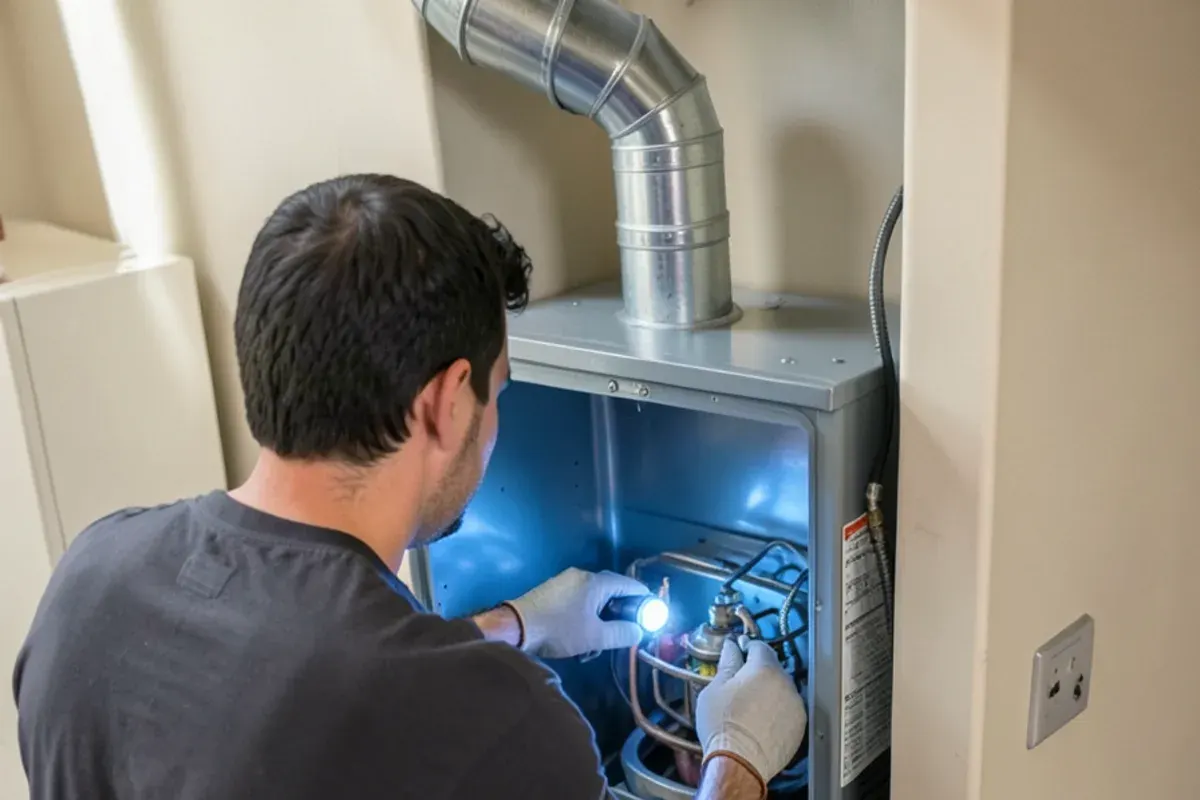
Derating means reducing the gas input so the burn matches the available oxygen. The exact rule belongs to the manufacturer, so the correct answer is always in the installation instructions for your model.
One major manufacturer's high-altitude kit instructions show how specific this gets. For its 90-plus furnaces:
- Elevations above 2,000 feet require a derate of 4 percent per thousand feet.
- Burner orifices are changed to reach the lower rate when the gas heating value calls for it.
- Factory orifices are sized for sea-level gas at 1,075 BTU per cubic foot, and regional gas with a lower heating value may remove the need for a change except at extreme altitude.
- The listed models require a pressure switch change at 5,000 feet.
Those instructions tell installers to follow local codes, or the National Fuel Gas Code (ANSI Z223.1/NFPA 54) where no local code applies. Other models and brands use different tables, so never apply that 4 percent to your furnace without checking its own manual.
Run the math once and you can see why this matters for sizing. Under that one rule, a furnace rated 80,000 BTU per hour at sea level would deliver about 28 percent less input at 7,000 feet, or about 57,600. Rated size on the box is not what the house receives.
Propane or Natural Gas Changes the Parts
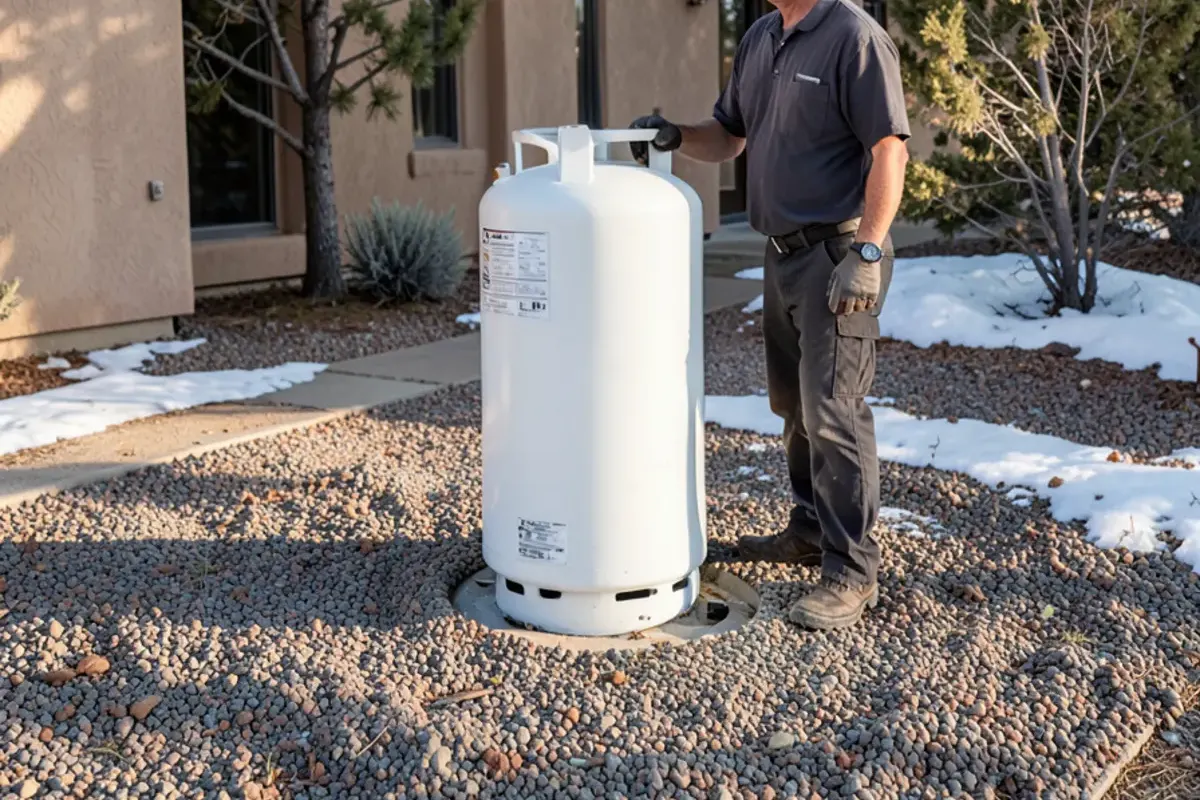
Many East Mountain homes run propane, while others are on natural gas. Confirm yours before anyone orders parts, since orifices and conversion kits differ by fuel and elevation. Your supplier can tell you the heating value of the gas delivered to your home, which the installer needs for the orifice calculation. The paperwork differs as well: 14.5.2.18 NMAC says LP gas installations need a licensed contractor and are permitted and inspected through the LP gas trade bureau.
Common High-Altitude Furnace Trouble in New Mexico
| Symptom | Common altitude-related cause | What to do |
|---|---|---|
| Starts, then locks out | Pressure switch, blocked vent or intake, weak draft | Clear snow from vents, then call if it repeats |
| Weak heat in a cold snap | Undersized for derated output, airflow problems | Compare the Manual J load to real output |
| Soot or yellow, lazy flames | Rich burn or dirty burners | Shut it off and call today |
| Gurgling, water near furnace, or a frozen drain | Condensate line freezing in exposed runs | Protect the line and clear it |
| Repeated CO alarm | Combustion or venting failure | Get outside, call 911, stay out |
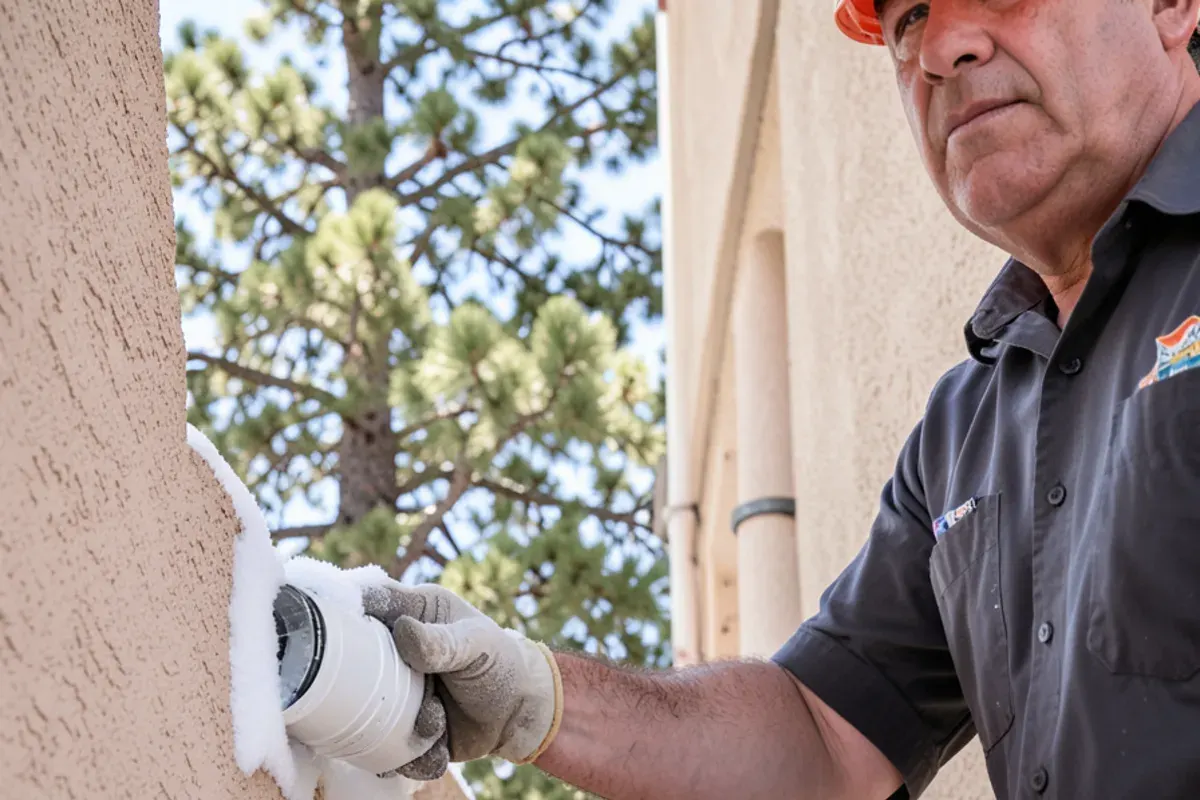
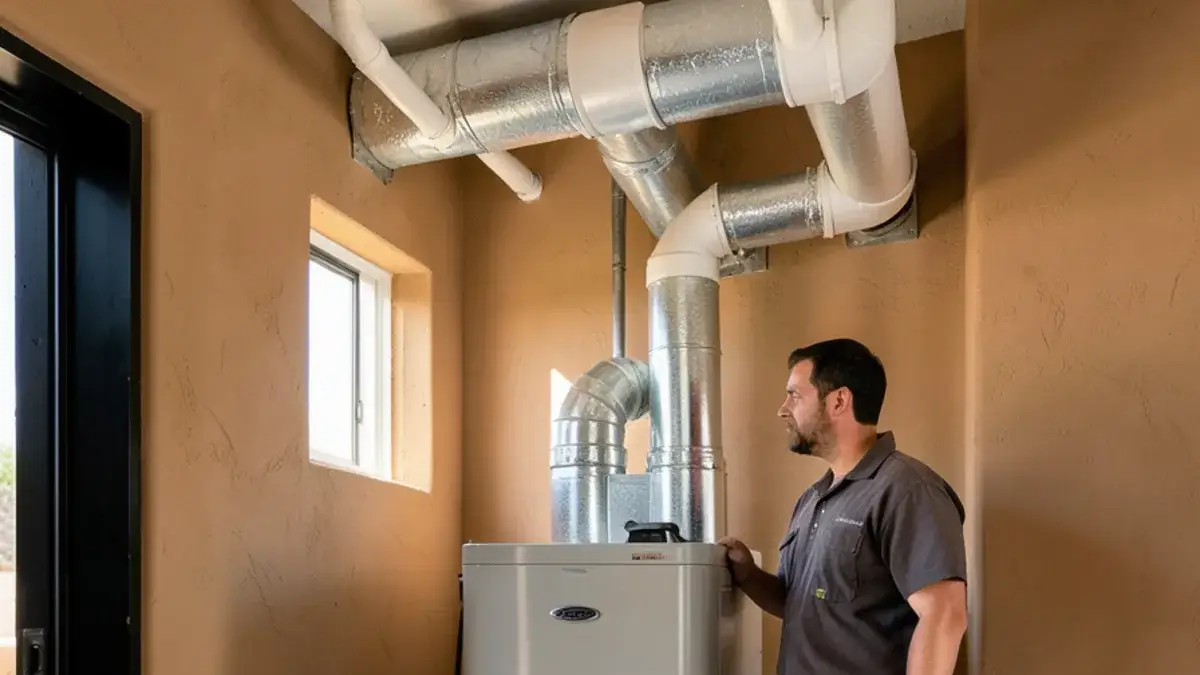
Sidewall vents add a local hazard. High-efficiency furnaces often vent through PVC pipes, and drifting snow or ice can block them. Check them after every storm and keep the snow line below the openings.
Combustion air needs the same attention. Sealed-combustion furnaces pull outdoor air through a pipe. Standard furnaces draw air from the room or closet, so a storage-packed closet or a newly sealed utility room can starve them. Follow the installation manual's combustion-air requirements rather than assuming the old setup still works.
What We Tell Customers in the East Mountains
- Ask for the high-altitude setup in writing on any new furnace. The quote should name the kit or orifices, if the manual requires them. Ask for the elevation used.
- Size from a load calculation. We use Manual J on new systems, then compare it to derated output rather than the nameplate.
- Ask for a combustion check at the elevation. After furnace installation or major repair, confirm gas pressure, temperature rise and flame before the job closes.
- Fit CO alarms. The CPSC says to install battery-operated or battery-backup alarms on every level of the home and outside sleeping areas.
- Service before snow. A fall furnace maintenance visit on a mountain home costs less than a no-heat call on a closed road.
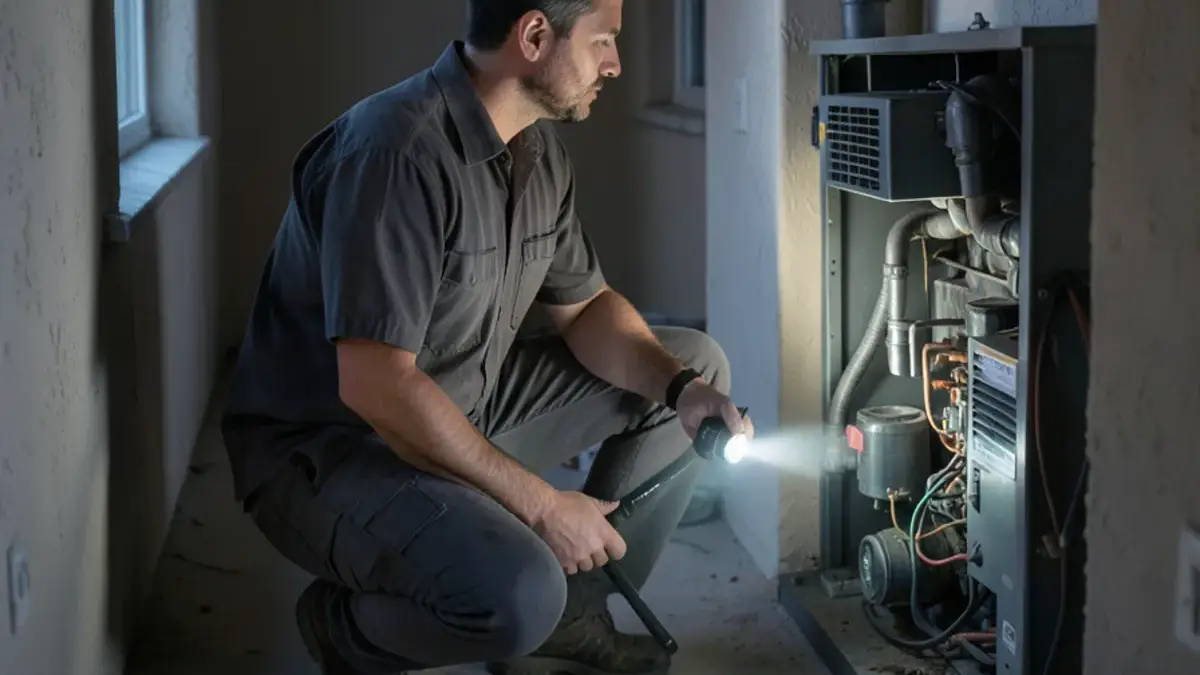
When something does fail, a furnace repair visit starts by reading what the furnace is reporting, not by replacing parts on a guess. Cedar Crest is about 40 minutes from our Paradise Blvd base, so call early when a storm is forecast.
Choosing a Furnace at Elevation: The Honest Trade-Offs
Mountain homes rarely get a free choice. Each option solves one problem and invites another.
| Choice | The upside | The downside |
|---|---|---|
| 90-plus sealed combustion | Pulls outdoor air, so a packed closet cannot starve it | Sidewall vents can drift shut, and condensate lines can freeze |
| 80 percent with a metal flue | No drain, and a simpler vent path | Draws room air, so it depends on the closet and a sound flue |
| Larger nameplate to cover the derate | More real output in deep cold | Short cycling on mild days if the load does not call for it |
| Keeping an older furnace going | Avoids a major purchase | Its original high-altitude setup may be undocumented |
The nameplate question comes up the most. Sizing up can be correct, but only when the Manual J load exceeds the derated output of the smaller unit. A furnace that is too big for a mild October afternoon cycles on and off through the shoulder seasons. A two-stage model is one way to narrow that gap, at a higher price.
Altitude Is a Setup Question
The answer to an altitude problem is usually written down. Find the model plate, find the high-altitude section of the manual, and make sure the furnace matches it for your elevation and fuel. Get that right and a furnace can run well for years at 7,000 feet.
Areas we serve
Common questions
Does every gas furnace in the East Mountains need a high-altitude kit?
Not every one, because the answer depends on the model, elevation and fuel. Some furnaces need a pressure switch, some need orifices, some need both, and regional gas heating value can change the orifice answer. The installation manual for your model decides. Ask your technician to show you the page, and to confirm which elevation they used.
Why does my furnace work in Albuquerque but fail in Tijeras?
It may not be the same setup. A furnace moved or specified for the valley may not suit a home around 6,400 feet, and the gap can show up as pressure switch faults or weak heat. A technician should check the model's high-altitude table, the switch and the orifices, along with vent length and condition, before replacing any parts.
Can I change the orifices on my furnace myself?
No. Gas work belongs with a qualified technician. Orifice size has to be calculated for your elevation and gas heating value, and a wrong size can create unsafe combustion or a gas leak at the fitting. After any change, gas pressure and combustion need testing with instruments, which is not something a homeowner can judge by eye.
Sources
- Rheem, 90+ gas furnace high-altitude kit instructions (RXGY series, manufacturer document hosted by a distributor)
- NFPA 54, National Fuel Gas Code
- USGS Elevation Point Query Service
- NOAA NCEI, Engineering Weather Data: Albuquerque
- U.S. Consumer Product Safety Commission, Carbon Monoxide Information Center
- New Mexico Regulation and Licensing Department, CID Investigation and Enforcement
- National Weather Service Albuquerque, Fall Freeze Feature
- National Weather Service Albuquerque, Fall Freeze Table
- 14.5.2 NMAC, Permits
Rather have someone look at it?
Call any hour. You get a straight answer, a free written estimate and the price before the work starts.
- NM CID License #413436
- 24 Google reviews
- Led by Dominic Montoya, over 20 years in the trade
- Free written estimates
Red Wrench Company, 5635 Paradise Blvd NW, Albuquerque, NM 87114, (209) 563-1270