

Swamp Cooler vs Refrigerated Air in Albuquerque
A swamp cooler is cheaper to run. Refrigerated air holds a set temperature when the monsoon arrives. Here is how to weigh the two.
- NM CID License #413436
- 24 Google reviews
- Led by Dominic Montoya, over 20 years in the trade
- Free written estimates
By Dominic Montoya, Owner of Red Wrench Company. Published , updated .
Choosing between a swamp cooler vs refrigerated air in Albuquerque comes down to which problem you would rather have. A swamp cooler uses far less electricity and works well in dry heat, but it uses water and loses ground in monsoon humidity. Refrigerated air costs more to install and run, and it holds a set temperature in any weather.
How Each System Cools a House
The two machines do different jobs. An evaporative cooler pulls outdoor air through wet pads, drops its temperature and pushes it through the house. That air has to leave again, so you open windows or install ceiling relief vents called up-ducts.
Refrigerated air recirculates indoor air across a cold coil and moves the heat outside through a condenser. The house stays closed, and the system pulls moisture out of the air as it runs. A conventional system typically delivers air at about 55°F, according to a report prepared for the U.S. Department of Energy's Building America Program.
Swamp Cooler vs Refrigerated Air in Albuquerque, Side by Side
| Factor | Swamp cooler | Refrigerated air |
|---|---|---|
| Install cost | DOE puts it at about half of central AC | Higher, more so if ducts must be added |
| Energy use | About a quarter of central AC, per DOE | Higher, and sensitive to duct leaks |
| Water | Uses water daily | None at the house, apart from condensate |
| Monsoon weeks | Weaker cooling, more indoor moisture | Holds temperature and removes moisture |
| Air path | Fresh outdoor air, windows cracked | Filtered, recirculated air, windows closed |
| Upkeep | Pads, pump, float, spring startup, winter drain | Filters, coil cleaning, annual check |
| Listed life span (DOE) | 15 to 20 years | 15 to 20 years |
Treat the DOE figures as national rules of thumb. Your numbers depend on the house, the equipment and your rates.
One older University of Arizona analysis gives a useful sense of scale. For a 2,000-square-foot Tucson home, it estimated about 250 kilowatt-hours a month for a swamp cooler against about 850 for an air conditioner, and roughly 150 gallons of water a day for the cooler. That is Tucson data from 2007, not an Albuquerque bill, but the trade is the same: less electricity, more water.
How Much Does Monsoon Humidity Really Change the Math?
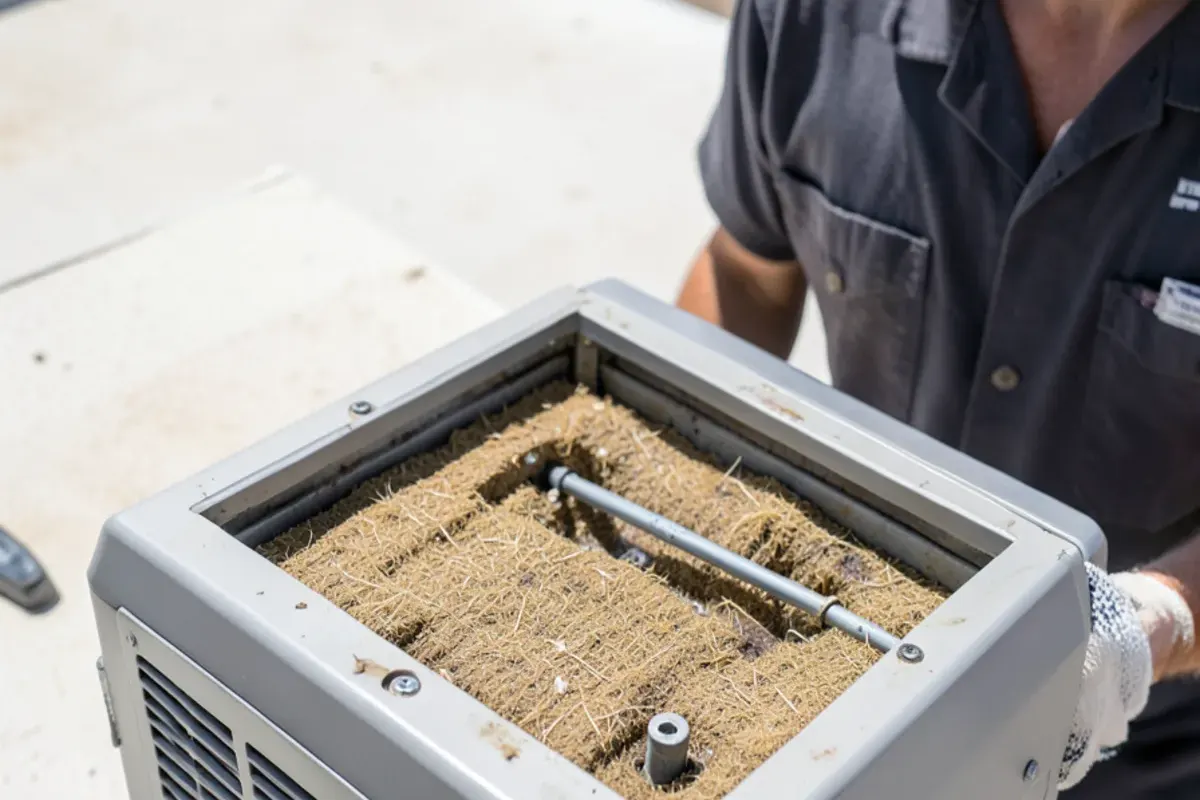
It changes comfort for part of the summer, not the whole summer. NCEI engineering data for Albuquerque covering 1967 to 1996 shows a 1 percent design wet-bulb temperature of 65°F, and the same report's table lists only about 10 hours a year above 67°F wet bulb. The Building America report says regions with a 1 percent wet bulb of 70°F or below can be comfortably cooled with a direct evaporative cooler.
So a swamp cooler is a legitimate choice here. National Weather Service Albuquerque puts the June through September average dew point at 44.5°F for 1947 to 2023, which is dry by most of the country's standards.
Heat is the part that is changing. NWS Albuquerque logged 30 days at or above 90°F in August 2026 against a normal of 16.5. A cooler that keeps up on a 90-degree day may fall behind in a long stretch of hotter ones, and monsoon moisture cuts its reach at the same time. We cover that in how monsoon humidity weakens evaporative cooling.
What Does a Conversion Actually Involve?
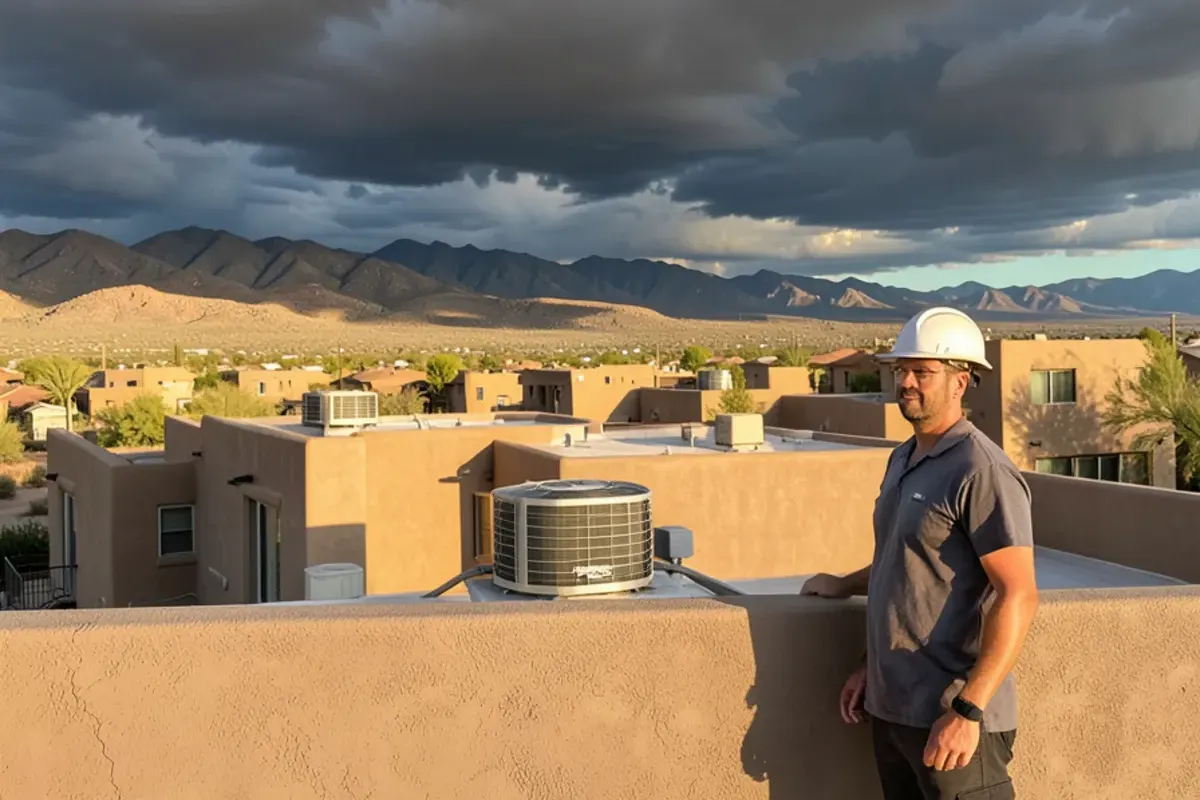
A conversion is more than a new box on the roof. Most of the work and most of the surprises sit in the ductwork.
A swamp cooler moves a large volume of air, often through a single central outlet or a short duct run. Refrigerated air needs supply ducts to each room and a return path back to the coil. Many older cooler ducts were never built for that, so we inspect them before quoting a swamp cooler to refrigerated air conversion.
Expect these items on a real quote:
- A Manual J load calculation, which sizes the system to the house rather than the old cooler
- Duct changes, including returns and sealing
- Removing the old cooler and closing the roof opening
- Electrical capacity for the new equipment
- A mechanical permit, with the quote stating who pulls it, and ours does
We do not publish a conversion price, because the ducts decide it. As a third-party reference, RealCostIQ's 2026 estimate for full HVAC replacement in Albuquerque is $7,536 typical, with most projects from $3,589 to $11,483. That is not a conversion quote and it is not ours. Get a written local quote for your house.
What We Tell Customers Weighing the Two
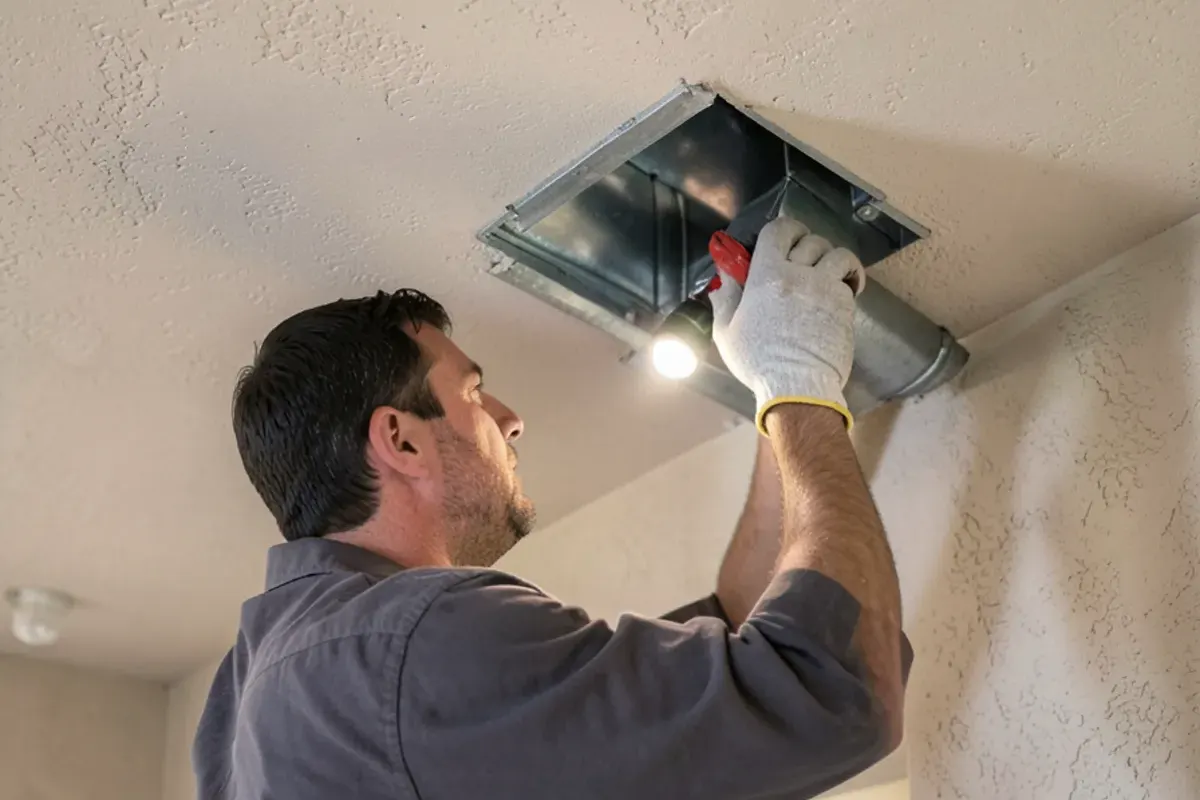
We start with who lives in the house, because the machine should fit the people.
- Keep the swamp cooler if it is in good shape, the ducts are poor, and you are comfortable with cracked windows and a few sticky weeks.
- Move to refrigerated air if anyone in the house struggles with heat, or you want the house closed against dust and smoke. A swamp cooler draws outdoor air inside, smoke included.
- Fix before you replace when the only trouble is a tired pump or crusted pads. Swamp cooler repair costs far less than a new system.
- Check the rules if you own a rental in the city. Albuquerque passed a cooling requirement in December 2024, and portable units and mobile evaporative coolers do not count as the sole cooling source. Reports differ on its reach, so confirm current status and enforcement with the City of Albuquerque.
Location matters too. Placitas sits around 6,000 feet on the Sandia foothills, so its summer afternoons tend to run milder than the valley floor, and a working cooler may cover more of the season. If your home is on a private well, count the cooler's daily water draw before you decide to keep it.
The Trade-Offs Behind Each Choice
Neither system wins every line, so decide which cost you would rather carry.
- Electricity or water. A cooler cuts the power bill and adds to water use. On city water, that is a line on a bill. On a well or a stressed supply, it may matter more than the kilowatts.
- Fresh air or a closed house. Moving outdoor air through the house feels pleasant in June. That same air carries dust, pollen and smoke, while refrigerated air lets you close up and filter what recirculates.
- Comfort across the whole season. Our own psychrometric estimate at Albuquerque pressure, using an 85 percent effective cooler, puts supply air near 64°F on a 95-degree day with a 30-degree dew point. On an 88-degree day with a 60-degree dew point it rises to about 71°F. Those are estimates, and they show why the same machine feels so different in July.
- Upfront or ongoing. A conversion is a large one-time bill. A cooler is cheaper to buy, and it asks for a roof trip every spring and fall for as long as you keep it.
- Keeping both. Two systems give you backup and two maintenance schedules, plus a roof opening that must be closed properly every time you switch.
Picking Between Them
Keep a sound swamp cooler if dry-heat cooling suits you and you accept the upkeep. Convert when you want a fixed temperature, a closed house and steady comfort through the monsoon. Either way, have the ducts inspected before you commit money, because they decide what a conversion costs and how well it works.
Areas we serve
Common questions
Can a house have both a swamp cooler and refrigerated air?
Yes, and some Southwest homes run both. The cooler handles dry months at low operating cost, and refrigerated air takes over when monsoon humidity arrives. The Building America report notes many households keep conventional cooling as a backup. Each system needs its own correct air path, so the cooler's roof opening should be closed off whenever refrigerated air is running.
Does a swamp cooler help with dry indoor air?
It adds moisture, which many people here find comfortable in June. DOE notes that the added moisture can improve comfort in a dry climate. The same moisture becomes a drawback during the monsoon, when indoor air is already damp. Watch for condensation or a musty smell in closed rooms, and keep relief windows open while the cooler runs.
Can I run a swamp cooler on smoky days?
Sparingly, unless you can filter the intake. EPA says an evaporative cooler can bring more smoke inside, and it suggests covering the outside air intakes with 4-inch MERV 13 furnace filters where you can reach them safely. On a roof-mounted Albuquerque cooler that is a hard job, and wind or rain can damage those filters. If smoke and heat arrive together, a cooled public space may be the safer plan.
Sources
- U.S. Department of Energy, Energy Saver 101: Home Cooling
- Southwest Energy Efficiency Project, New Evaporative Cooling Systems, prepared for the DOE Building America Program
- Chatterjee and Lenart, University of Arizona, Southwest Hydrology, 2007
- National Weather Service Albuquerque, Dew Point Tracker
- NOAA NCEI, Engineering Weather Data: Albuquerque
- National Weather Service Albuquerque
- U.S. EPA, Wildfires and Indoor Air Quality
Rather have someone look at it?
Call any hour. You get a straight answer, a free written estimate and the price before the work starts.
- NM CID License #413436
- 24 Google reviews
- Led by Dominic Montoya, over 20 years in the trade
- Free written estimates
Red Wrench Company, 5635 Paradise Blvd NW, Albuquerque, NM 87114, (209) 563-1270