

Why Is My AC Blowing Warm Air? 7 Common Causes
Two of these you can fix in five minutes. The others need a meter and gauges, and we explain why.
- NM CID License #413436
- 24 Google reviews
- Led by Dominic Montoya, over 20 years in the trade
- Free written estimates
By Dominic Montoya, Owner of Red Wrench Company. Published , updated .
An AC blowing warm air usually has a setting problem, an airflow problem, a power problem at the outdoor unit or a refrigerant leak. Check the thermostat and filter, then look at the condenser fan. If the air stays warm, shut the system off and call Red Wrench Company, because a stalled fan or frozen coil can damage the compressor.
Why Is Your AC Blowing Warm Air? 7 Causes, Easiest First
Start at the top. Most homeowners can handle the first two, and the rest take a technician.
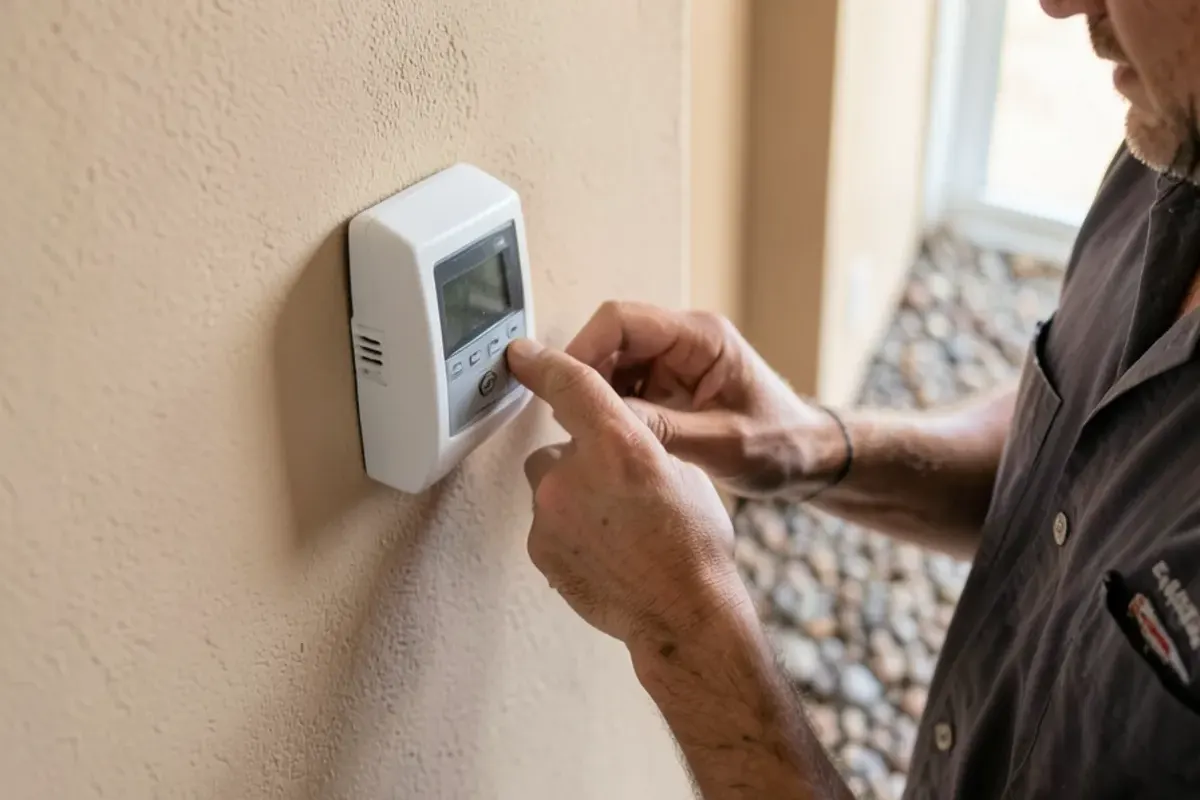
- The thermostat is set wrong. A setting of Fan On instead of Auto moves air even when the system is not cooling, and that air feels warm. Heat mode does the same. Set it to Cool and Auto.
- The filter is clogged. ENERGY STAR says to check filters monthly, since a dirty one can raise energy costs and lead to early failure. Low airflow makes a house feel warm before it damages anything.
- The evaporator coil froze. Low airflow or low charge lets ice build on the indoor coil. Air stops moving across it, and what comes out is weak and warm.
- The outdoor unit has no power. A tripped breaker, a pulled disconnect or a failed contactor leaves the indoor blower running with nothing cooling the refrigerant.
- The capacitor or fan motor failed. A condenser that hums without the fan turning often has a bad capacitor. The compressor can overheat if that continues.
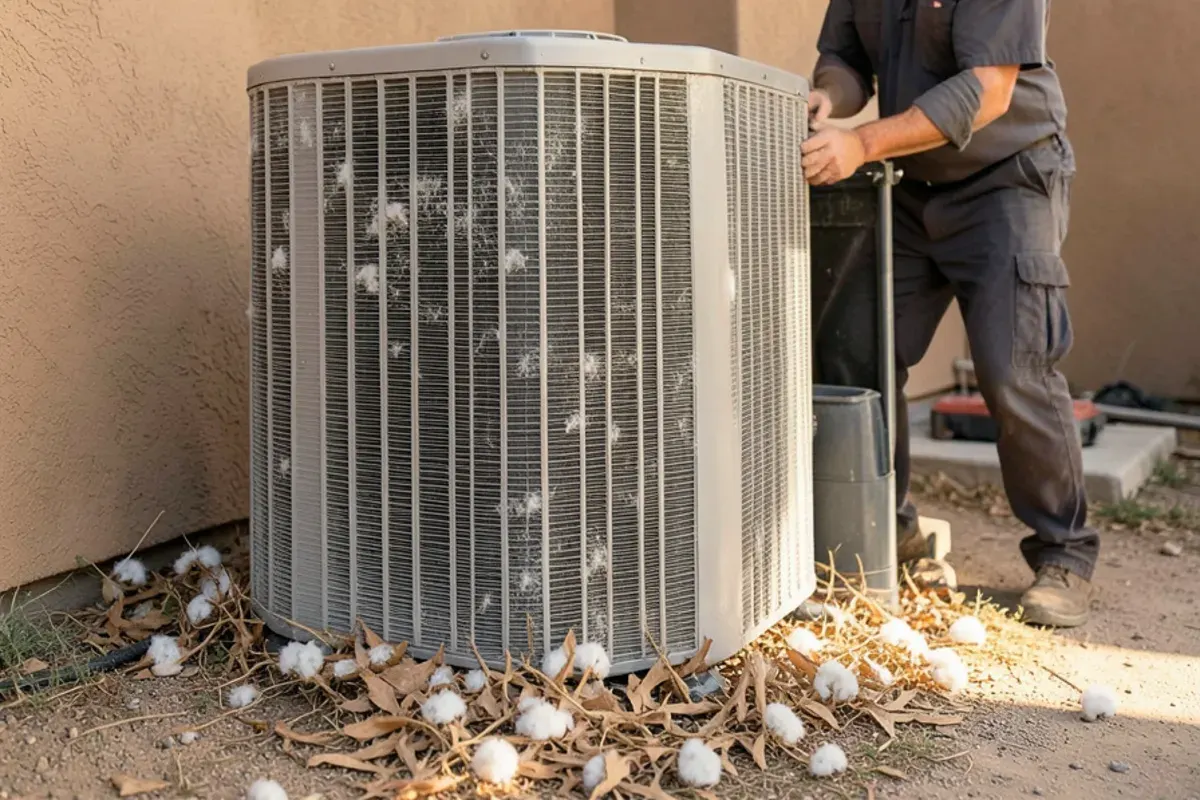
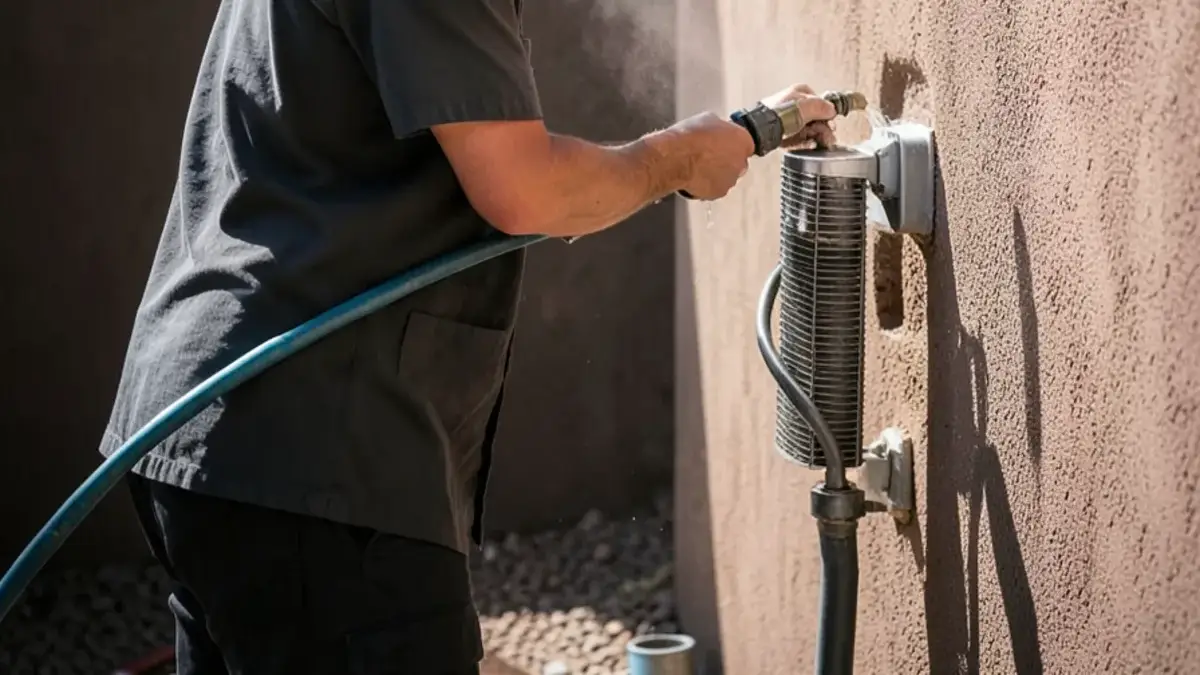
- The condenser coil is packed with dust. Heat cannot leave the refrigerant, so the indoor air stays warm on the hottest afternoons.
- The system lost refrigerant. It moves in a sealed loop and does not wear out, so a low charge means a leak somewhere.
Sometimes the cause sits outside the equipment. ENERGY STAR says a typical house loses about 20 to 30 percent of the air moving through its ducts, so a torn return duct in a hot attic can pull warm air into the system. If one room is warm and the rest are fine, look at duct repair instead.
What Should You Check Yourself?
Run through this list before you call. Each step is safe, and each one narrows the problem.
- Set the thermostat to Cool and Auto, and wait about ten minutes.
- Replace the filter if you cannot see light through it.
- Look for ice on the lines or a wet floor near the air handler.
- Check the breaker for the outdoor unit and reset it once if it tripped.
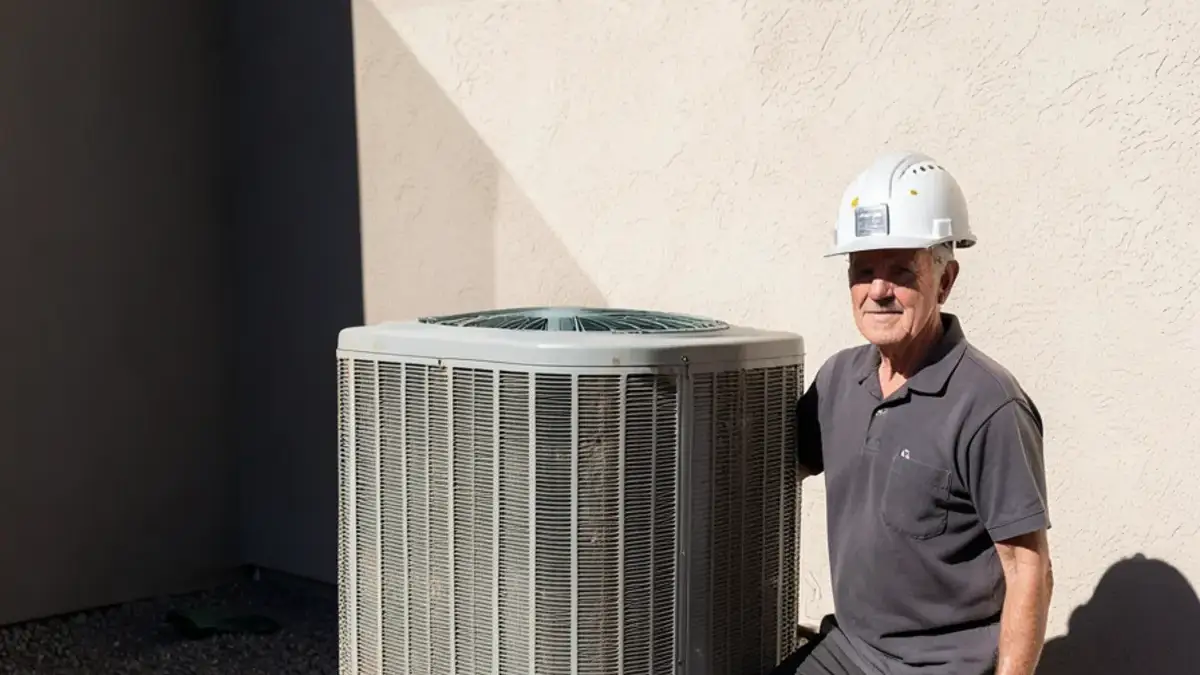
- Go outside and see whether the condenser fan is spinning.
- Clear leaves, weeds and anything stacked against the unit.
Stop if you find ice. Turn cooling off and run the fan on its own until the coil thaws, which can take hours. Restarting too soon just freezes it again.
Leave the condenser's electrical panel alone. Stored charge in the capacitor is a real shock hazard, even with the power off, and the fix takes a meter.
How Cold Should the Air at the Vent Be?
Measure it instead of judging by hand. Run cooling for about 15 minutes, then hold a kitchen probe thermometer in the return grille and in the nearest supply vent. Write down both numbers.
A common field rule of thumb is a drop of about 15 to 20°F between the two with good airflow. A report prepared for the DOE Building America Program says a conventional system typically delivers air near 55°F. Dry air here can push the drop past that range, so treat these figures as a rough guide. A drop of only a few degrees means the system is moving air and doing little cooling. Give us both readings when you call.
Why Do Warm-Air Calls Spike in Albuquerque?
Our climate finds weak parts. National Weather Service Albuquerque logged 30 days at or above 90°F in August 2026, nearly double the normal of 16.5, and 551 cooling degree days against a normal of 367. A cooling degree day counts how far a day's average temperature ran above 65°F, a common measure of cooling demand.
Dust adds to it. Spring wind packs coils, and a dirty coil raises the pressure and heat the compressor works against. Monsoon storms bring power flickers that are hard on electrical parts. Homes in the older valley neighborhoods, like parts of Los Ranchos de Albuquerque, may be running older systems with less margin left.
How a Technician Narrows It Down
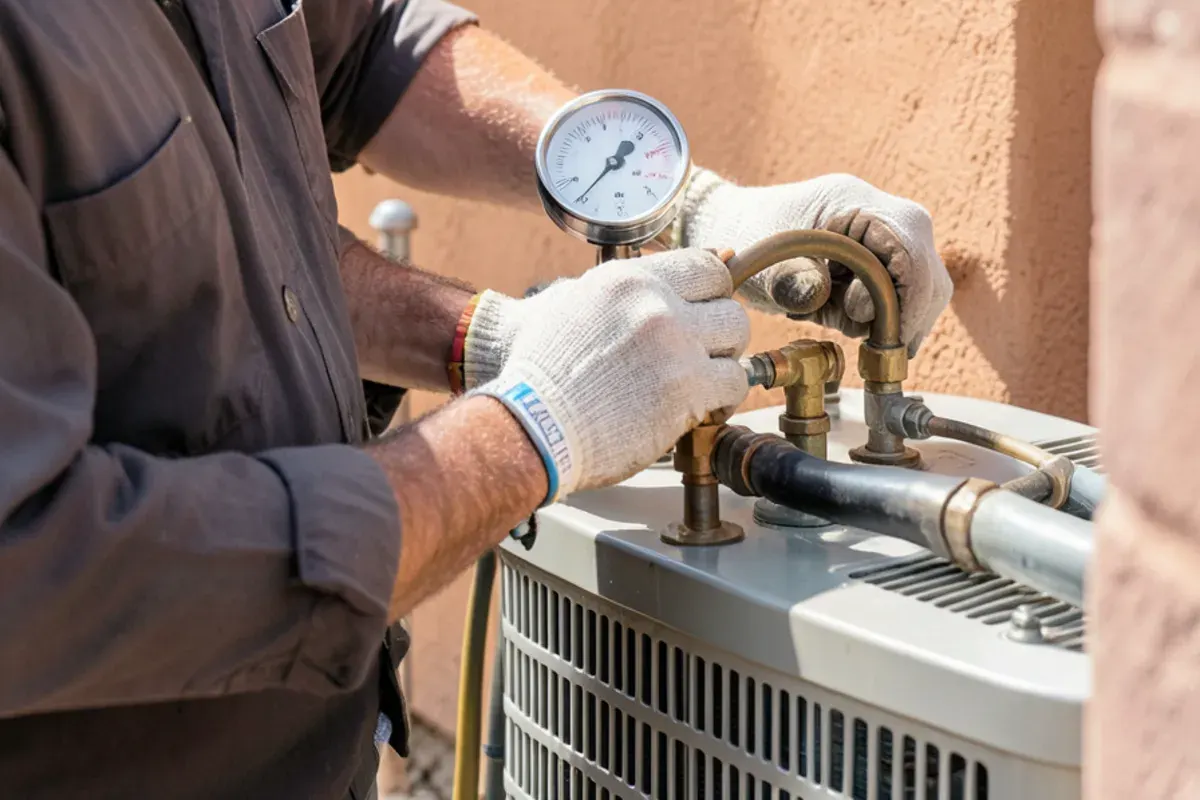
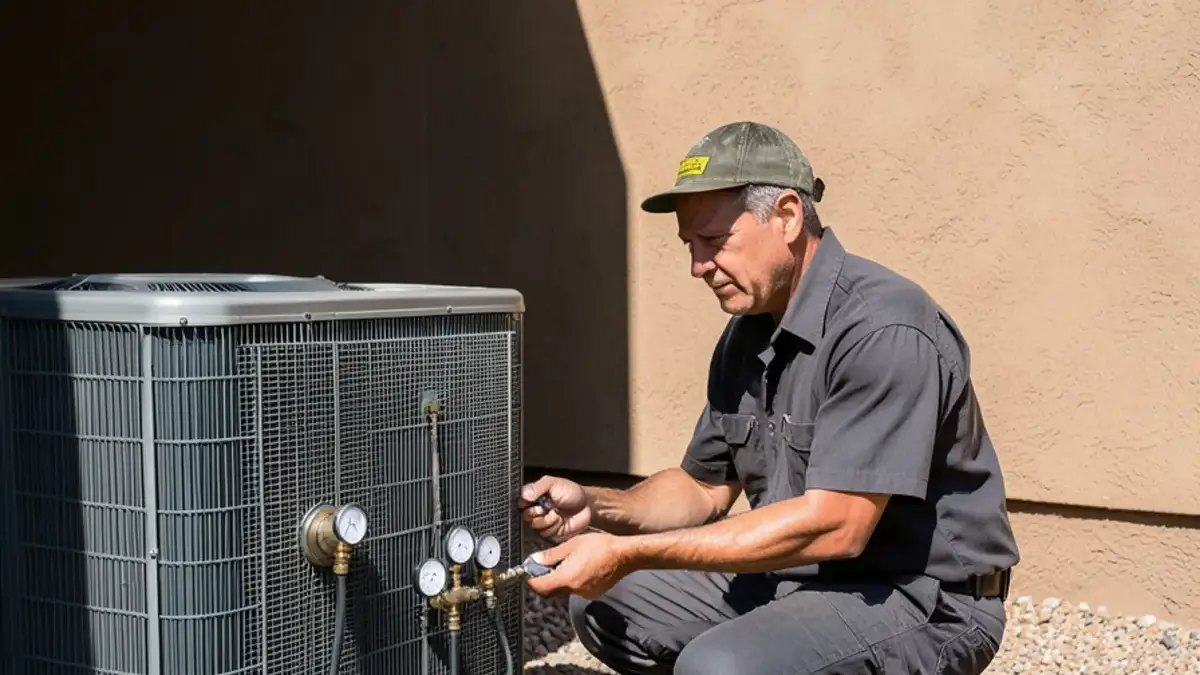
The diagnosis follows the same logic each time. We check power first, then the capacitor and contactor, then pressures and temperatures to judge the refrigerant charge and airflow. If those point to a leak, we find it before we add anything.
If the compressor will not start, we test its windings and start components before calling it dead. That verdict should come with readings, since it is the most expensive answer on this list.
A reading is better than a guess. We show you the failed part or the measurement, then write up the options and the price before any repair starts on an AC repair visit.
What We Tell Customers About Warm Air
Three rules prevent most of the expensive versions of this problem.
Shut it down early. Many warm-air calls end in a small repair. A compressor run for days with a stalled fan does not.
Fix the leak, not the level. Topping off refrigerant without finding the leak means paying again soon. EPA says owners can keep repairing existing systems, but also warns that refrigerant and parts availability may lessen as HFCs phase down, so a leak is worth fixing properly.
Plan for the second failure. On an older system, one failed part can be a cheap fix. A compressor or coil is the moment to compare a repair against AC replacement. We can price both on one visit.
The Trade-Offs Behind Common Warm-Air Fixes
Most of these repairs have a cheaper path and a better one, and the gap deserves a straight explanation.
- Recharge or leak search. A top-off restores cooling for less money today, but the refrigerant leaves again. A leak search costs more up front, and a pinhole inside a coil can still stay hidden. Ask what the search covers and what happens if it finds nothing.
- Capacitor only or capacitor plus cause. A new capacitor is a small repair. If heat or a dragging fan motor killed the old one, the new part may not last, so the motor deserves a test on the same visit.
- Coil cleaning or coil replacement. Cleaning is far cheaper and often enough for dust. A leaking or corroded coil will not clean its way back.
- Thaw and restart or wait for a diagnosis. Thawing costs hours of warm house, and the ice comes back if the cause remains. Fan-only running in the meantime beats forcing cooling.
- Surge protection. A surge protector at the condenser is modest insurance against monsoon power flickers. It lowers the risk and will not stop every strike, so weigh it against the age of the parts it protects.
Getting the Cold Air Back
Start with the thermostat and filter, check the fan, and stop if you see ice. Most warm-air problems have a clear cause and a clear fix once they are tested.
The best prevention is boring. Change the filter, keep the condenser clear and book AC maintenance in spring. If it is warm now, call (209) 563-1270, and tell us what you found on the checks above.
Areas we serve
Common questions
Why is my AC blowing warm air but the outside unit is running?
A dirty condenser, a low refrigerant charge or a frozen indoor coil are the likely causes. Check the filter first and look for ice. If the coil is clear and the air stays warm, shut the system off and call, because a technician needs gauges to read the charge.
Can a power flicker make my AC blow warm air?
Yes. A storm can trip the breaker, reset a thermostat or damage a capacitor or control board. Check the breaker and thermostat settings first. Monsoon storms are the usual trigger here. If the condenser hums or the fan does not spin after that, call for a repair.
How long should an AC take to blow cold air after it starts?
Usually a few minutes. Give it about ten, since some thermostats hold the compressor off for a short delay after a power flicker. Ducts in a hot attic can send out warm air at first on an August afternoon in Albuquerque. If the vent air is still warm after 15 minutes, check the filter and the condenser fan, then shut it off and call.
Rather have someone look at it?
Call any hour. You get a straight answer, a free written estimate and the price before the work starts.
- NM CID License #413436
- 24 Google reviews
- Led by Dominic Montoya, over 20 years in the trade
- Free written estimates
Red Wrench Company, 5635 Paradise Blvd NW, Albuquerque, NM 87114, (209) 563-1270