

Heat Pump vs Furnace: Which Fits a New Mexico Home?
Your fuel, your coldest nights and your cooling plans decide this, and the federal tax credit is no longer part of the math.
- NM CID License #413436
- 24 Google reviews
- Led by Dominic Montoya, over 20 years in the trade
- Free written estimates
By Dominic Montoya, Owner of Red Wrench Company. Published , updated .
The heat pump vs furnace New Mexico decision usually turns on your fuel. A heat pump makes a strong case against propane or electric resistance heat, and it replaces your air conditioner too. Natural gas can be harder to beat on running cost, so a furnace or dual-fuel system may fit better. Compare using your own rates and coldest nights.
How Each System Makes Heat
A gas furnace burns fuel and pushes the heat through ducts. Its efficiency rating is AFUE, the share of the fuel's energy that becomes usable heat in the home.
A heat pump moves heat rather than making it. It pulls heat from outdoor air, even cold air, and delivers it indoors, then reverses in summer to cool the house. Its ratings are HSPF2 for heating and SEER2 for cooling. The DOE minimum for split heat pumps nationwide is 14.3 SEER2 and 7.5 HSPF2.
That reverse trick matters here. If your AC is also aging, one heat pump can replace both jobs.
Heat Pump vs Furnace in New Mexico at a Glance
| Factor | Heat pump | Gas furnace |
|---|---|---|
| Cooling | Included | Needs separate AC |
| Fuel | Electricity | Natural gas or propane |
| Coldest nights | Output falls as it gets colder, so check data | Output steady at the set altitude rating |
| Altitude | Ask for manufacturer data for your elevation | Follow the high-altitude instructions |
| Air temperature at vents | Milder, longer run times | Hotter, shorter bursts |
| Ducts | Needs enough airflow, so inspect first | Often works with existing ducts |
| Combustion safety | No burner in the home | Needs venting and CO alarms |
| Rebates | HEAR and PNM may apply | NMGC may apply |
Neither column is the winner by default. A home's fuel and duct condition can flip the answer.
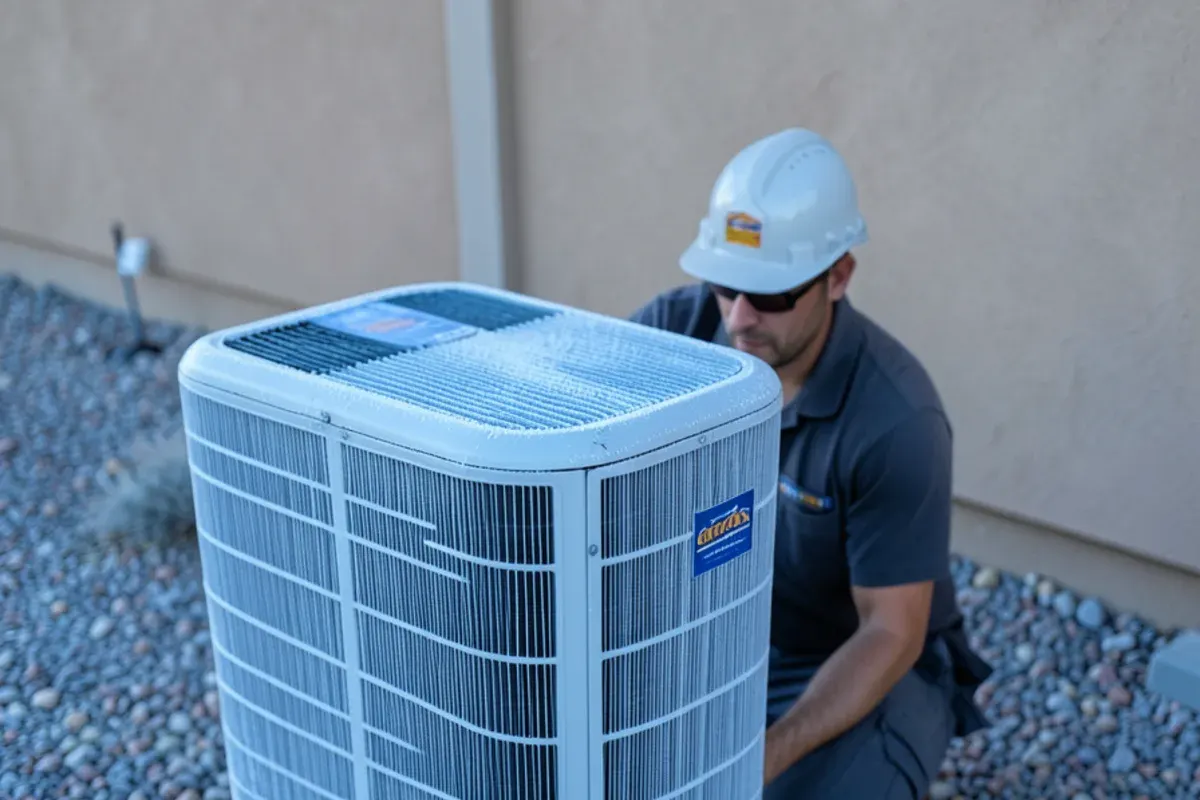
How Cold Does It Get, and Does That Rule Out a Heat Pump?
It does not rule one out, but it sets the equipment you should choose. NCEI engineering data for Albuquerque (1967 to 1996) lists a 99 percent heating design temperature of 19°F and 99.6 percent of 15°F. Albuquerque also averages about 113 freezing nights a year.
Higher ground runs colder. Edgewood sits around 6,600 feet in the East Mountains, and we would not borrow Albuquerque's design number for a house there. Use a design temperature for the actual location.
For cold weather, look at the ENERGY STAR cold-climate designation. To earn it, a heat pump must meet a coefficient of performance of at least 1.75 at 5°F, and hold at least 70 percent of its 47°F heating capacity at 5°F. Those are minimums for a label, not a promise for any one machine.
The sizing step should use real data. PNNL's Building America guide says equipment should not be selected on nameplate capacity. Use the manufacturer's extended performance tables to see output at your design temperature, then find the balance point, which is the lowest outdoor temperature at which the unit alone covers the house. Below that, something else has to help.
What About Backup Heat?
Plan it from the start. PNNL calls electric resistance auxiliary heat inefficient and typically expensive, and says it should be minimized. A heat pump that leans on strip heaters every cold night can give you a nasty January bill.
The alternative is dual fuel: a heat pump paired with a gas furnace that takes over in deep cold. ENERGY STAR notes that if you have a newer furnace and an older central AC, a heat pump can pair with the furnace for a modest extra cost over a new AC. For many metro homes with sound furnaces, that is the most practical route.
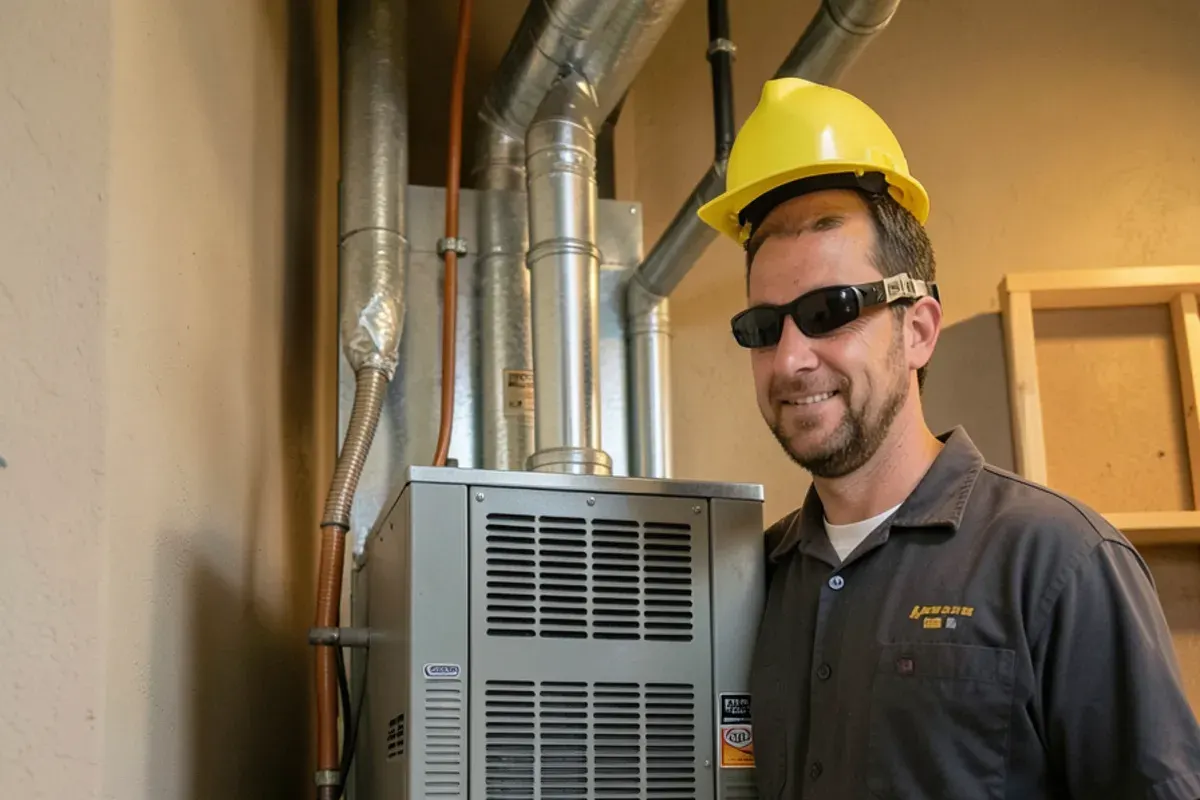
How Do Fuel Costs Compare Here?
Run the numbers with your own bills, because rates and fuels vary across the state. Metro homes are generally on PNM and New Mexico Gas Company. Many East Mountain and Estancia Valley homes run propane, and electric service there often comes from a co-op such as Central New Mexico Electric, so confirm yours.
ENERGY STAR says switching from electric resistance, propane or oil heat to a heat pump can lower bills. Natural gas is less clear, and a written comparison using your own rates beats any general claim, ours included.
You can run that comparison yourself in a few minutes. Take the price per unit from a winter bill and turn it into the cost of one million BTU of delivered heat, using EIA's conversion factors of 100,000 BTU per therm, about 91,500 per gallon of propane and 3,412 per kilowatt-hour.
| Heat source | Cost of 1 million BTU delivered |
|---|---|
| Natural gas furnace | Price per therm x 10, divided by AFUE |
| Propane furnace | Price per gallon x 10.9, divided by AFUE |
| Electric resistance | Price per kWh x 293 |
| Heat pump | Price per kWh x 293, divided by COP |
Write AFUE as a decimal, so 0.95 for 95 percent. COP is the heat delivered per unit of electricity, and it falls as the outdoor temperature drops, so run the math at a typical winter temperature and again at your design temperature. Leave out fixed monthly charges unless you would actually drop that service.
What Rebates Are Left in 2026?
There is no federal HVAC tax credit to count on. The IRS says the Energy Efficient Home Improvement Credit covered improvements through December 31, 2025, and it does not apply to equipment placed in service after that. Older web pages still quote it.
Check these instead, and confirm each before you buy:
- HEAR: up to $8,000 for a heat pump for lower-income households, through EMNRD. A May 2026 federal rule change may limit rebates for replacing gas equipment with electric, so confirm eligibility and the current contractor list with EMNRD.
- PNM: reported amounts conflict, from about $300 to $860 for a heat pump. Verify with PNM.
- New Mexico Gas Company: the furnace rebates we have seen cited run about $325 to $500, and commonly up to $425. A company release dated July 8, 2026 reports up to $625 for eligible furnaces or boilers. Verify with NMGC.
- State tax credit: EMNRD lists air source heat pumps under its Energy Conserving Products credit. Check annual cap and availability with EMNRD.
Keep the invoice and AHRI documentation either way.
As a third-party reference, RealCostIQ's 2026 estimate for full HVAC replacement in Albuquerque is $7,536 typical, within a $3,589 to $11,483 range for most projects. Other system prices are not sourced, so get a written local quote.

What We Tell Customers Choosing a Heating System
- Start with the fuel you have. Propane homes usually have the strongest case for a heat pump.
- Do not replace a good furnace to chase efficiency. Add a heat pump when the AC dies, and let the furnace back it up.
- Inspect ducts first. A heat pump needs airflow, and old ducts may fall short.
- Size from Manual J, using the real location, not a nearby city.
- Ask for numbers at your elevation. That goes for both heat pump installation and furnace replacement, since a gas furnace installation has to follow the manufacturer's high-altitude instructions.
Where Each Option Costs You Something
Every choice here gives something up, and a fair quote should say what.
- A heat pump runs all year. One machine now heats and cools, so it logs more hours than an AC alone, and one failure takes out both jobs.
- A furnace plus AC means two systems. The parts age separately, so one can fail without the other. You also carry two sets of maintenance, plus venting and CO alarms.
- Dual fuel needs a changeover decision. Someone has to set the outdoor temperature where the furnace takes over. Set it from your rates, not from habit. You also keep your gas service and its monthly charge.
- Milder vent air is a real comfort change. Longer runs at lower temperatures hold a house steady, but some people miss the blast of a furnace.
Which One Should You Choose?
Lean toward a heat pump on propane or electric heat, or when the AC is due at the same time. Lean toward a furnace with sound gas service and a healthy existing AC. Choose dual fuel when you want the efficient option most of the year and a burner for the deep cold. Ask for both written options, and base the choice on your house.
Areas we serve
Common questions
Do heat pumps work in the East Mountains?
They can, with the right equipment and design. Choose a model with published low-temperature data, size it using a design temperature for your actual location, and plan your backup heat. Keep the outdoor unit above snow height and clear of roof runoff. Homes on propane often see the strongest case, though each one needs its own load calculation.
Is there a federal tax credit for a heat pump in 2026?
No. The IRS says the Energy Efficient Home Improvement Credit applied to improvements made through December 31, 2025. Equipment placed in service after that does not qualify. New Mexico programs such as HEAR and utility rebates may still help, but eligibility and amounts change, so confirm with EMNRD, PNM or New Mexico Gas Company first.
Does a heat pump need a bigger electrical panel?
Sometimes. It depends on the panel's capacity, what else it serves, and the size of the unit and any strip heat. Older homes are the likeliest to need work, so ask for a load review in the quote. EMNRD lists up to $4,000 for an electrical panel and $2,500 for wiring under HEAR for eligible households, so check that before paying for upgrades.
Should I keep my gas furnace if I add a heat pump?
Usually, if the furnace is sound. Keeping it gives you dual fuel without buying new heating equipment, and the burner covers the coldest nights. You will keep paying for gas service, and the furnace still needs its yearly inspection. Removing it only makes sense when the heat pump can carry your design temperature alone and backup is planned.
Sources
- NOAA NCEI, Engineering Weather Data: Albuquerque
- ENERGY STAR, Heat Pump Equipment Key Product Criteria
- PNNL Building America Solution Center, Cold Climate Heat Pump Sizing and Selection
- PNNL Building America Solution Center, Ductless Mini-Split Heat Pumps
- IRS, Energy Efficient Home Improvement Credit
- New Mexico EMNRD, Energy Conservation and Management Division
- New Mexico EMNRD, Energy Conserving Products tax credit
- U.S. Department of Energy, A Guide for Contractors to Share with Homeowners
- U.S. EIA, British Thermal Units
- New Mexico EMNRD, Home Energy Rebate Program FAQ
- New Mexico Gas Company, Energy Efficiency Expansion release, July 8, 2026
Rather have someone look at it?
Call any hour. You get a straight answer, a free written estimate and the price before the work starts.
- NM CID License #413436
- 24 Google reviews
- Led by Dominic Montoya, over 20 years in the trade
- Free written estimates
Red Wrench Company, 5635 Paradise Blvd NW, Albuquerque, NM 87114, (209) 563-1270